Reap what you shall sow

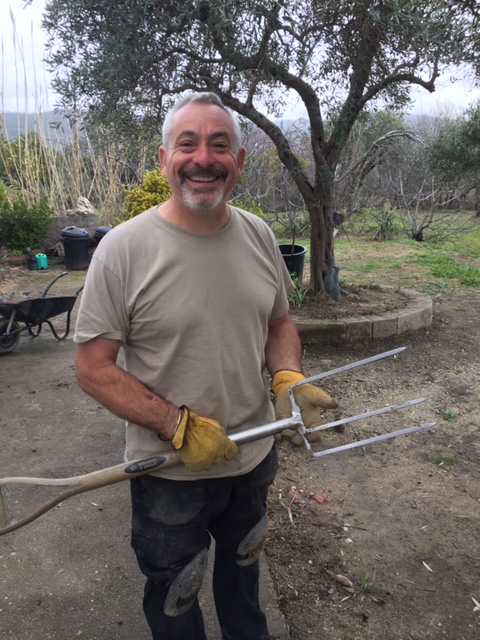
Taking the proverb literally, we decided that this was the week our new veggie patch would be created. With all the land around the farm, anyone could be forgiven for thinking that we were spoilt for choice when choosing a suitable location for it. Not so, there are apparently lots of things to consider when creating a vegetable garden, including having the right tools for the job. Our one and only fork lost a prong early in the game, so the stack of jobs for Mark and his welder continue to build up.
Keen to grow as much as possible to meet own needs, and hopefully have some left over to give away,  we knew that the plot had to be in the right place.   Our seedlings are growing at some speed and it won’t be long before they need to be planted out, so we knew we had to crack on. 

Not wanting to make the same mistake as last year when we planted all our seeds at once, resulting in about 200 lettuces all being ready at the same time, we have staged the growth of seedlings and have another dozen or so packets waiting for their turn in the propagator once the first growth have been planted out.

Back to planning … there was so much to think about…  how big does it need to be? what was the soil like? will it get enough sun? will it get enough shade? would it be in the direct line of the wind coming down off the Gardunha’s? will it be easy to irrigate? is it accessible?  These were only a few of the things going round in our heads but eventually we agreed  … then changed our minds – twice before deciding on the perfect spot!

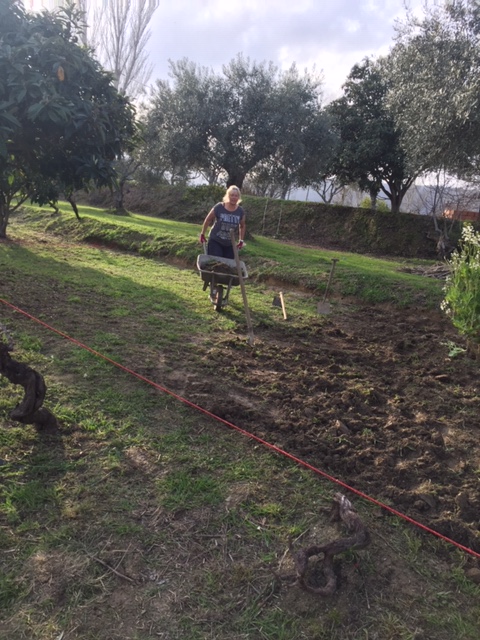
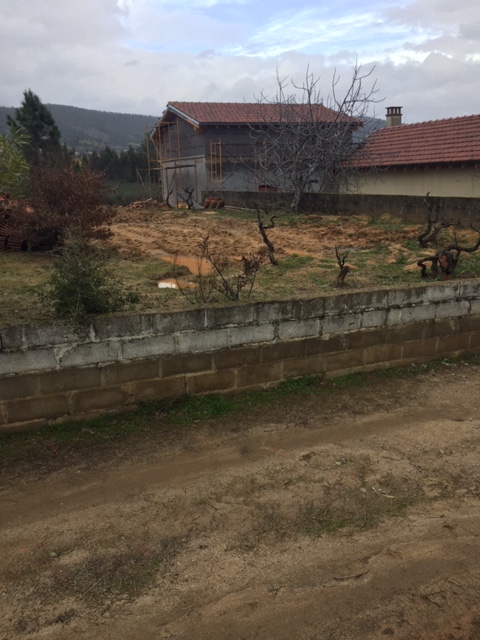
The first step was to mark out the shape of the garden with some red rope and metal rods.  Reading the sowing instructions on our packets of seeds it seems that we have to leave quite a lot of space in between the plants so we went big – Mark was unsure if it was a vegetable garden or an extension to the nearby N239. 

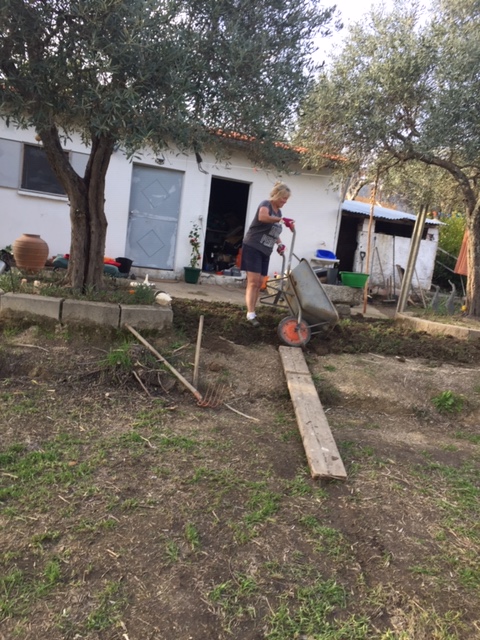
We spent the next two days digging up the grass and relocating it to in front of the annexe.  There was a bare compacted mud hollow between the two olive trees and we’d decided to build it up with our excavated soil and use some of the grass seed we had brought with us to try and create a tiny grassed area.  Not sure how successful we will be but we’re hoping with plenty of watering we will be able to keep it green during the summer months. 


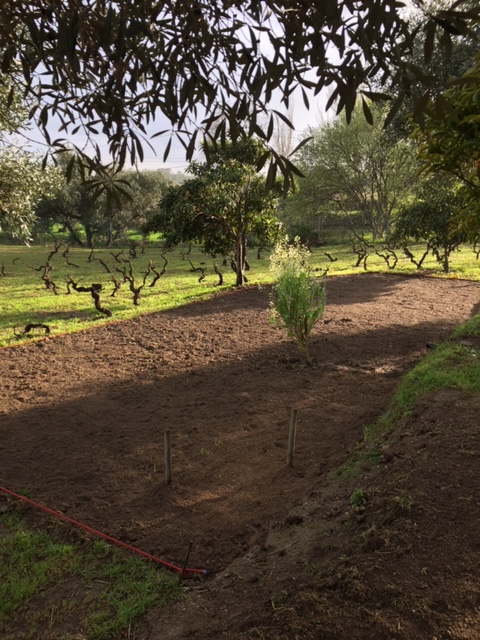
We dug, we raked, we levelled and raked again and finally we were happy with the result. In the middle of our vegetable plot standing proudly is the old walking stick cabbage. I remember seeing this growing up through the long grass when we first came to look at the farm a couple of years ago. Since moving in we’ve redirected our grey water onto this terrace and the cabbage plant seems to love it. The waste water pipe is buried just under the soil leading from the bathroom (where the washing machine is) and comes out on the top of the bank near the cabbage. We didn’t realise just how much water is used doing the laundry and we will certainly be looking to make good use of the grey water in the long house. We’re learning bit by bit.
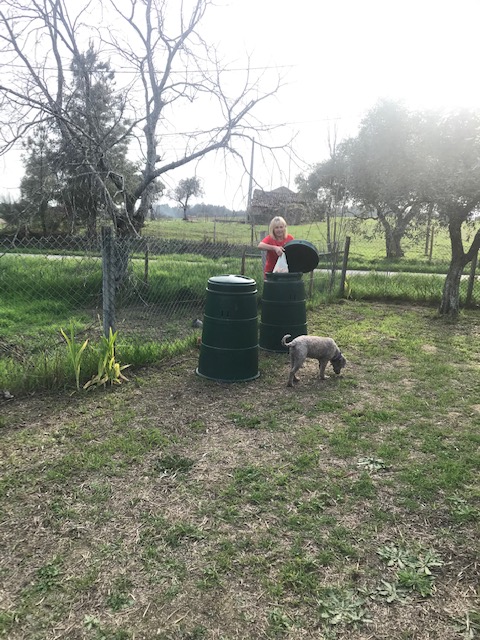
Our 2 compost bins we had in the UK hitched a ride on our removal van and with all the cutting back we had to do when we first arrived, were filled up within a day.  My impatience got the better of me and I ordered some compost accelerator tablets online.  Once delivered they were quickly put to good use and within three weeks the level in the bins had reduced by half the size.  I’m glad we decided to place them at the end of the terrace as there are hundred of tiny little flies in and around them.  Back to researching and we have been looking in to the sort of stuff we can compost.  Some of our trusty orange skins, Vegetable peelings, egg shells, grass cuttings, ash from the log burner to name a few.  It’s going to be a while before we can use it but maybe when we have finished harvesting our home grown stuff it might just be ready.
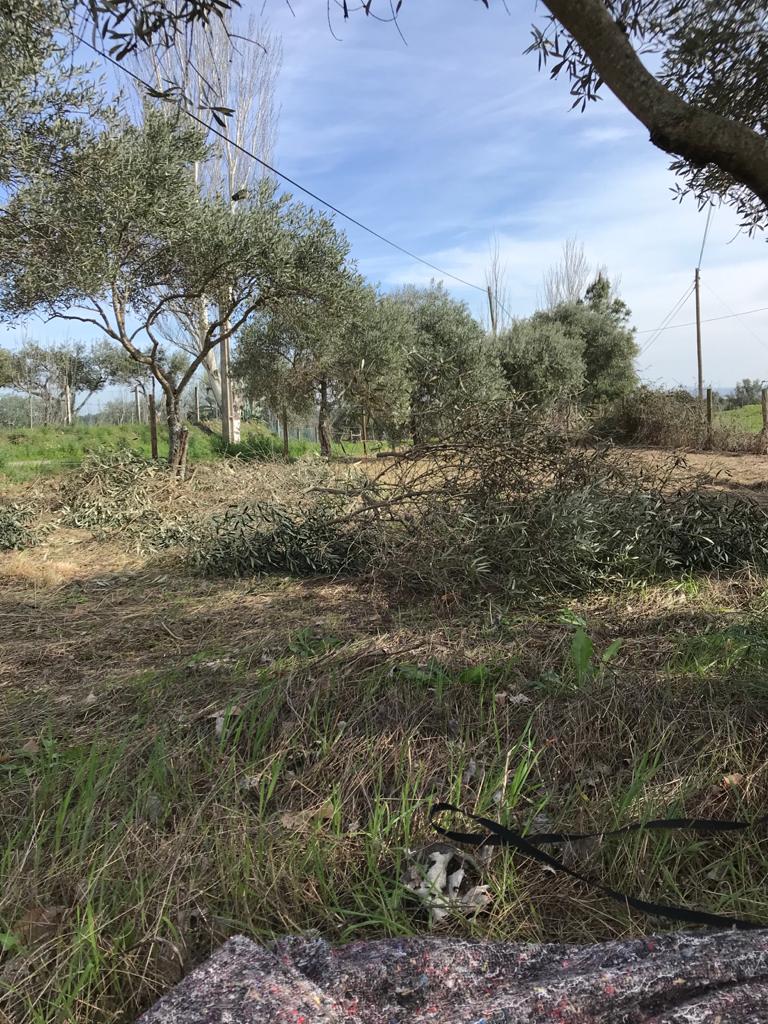
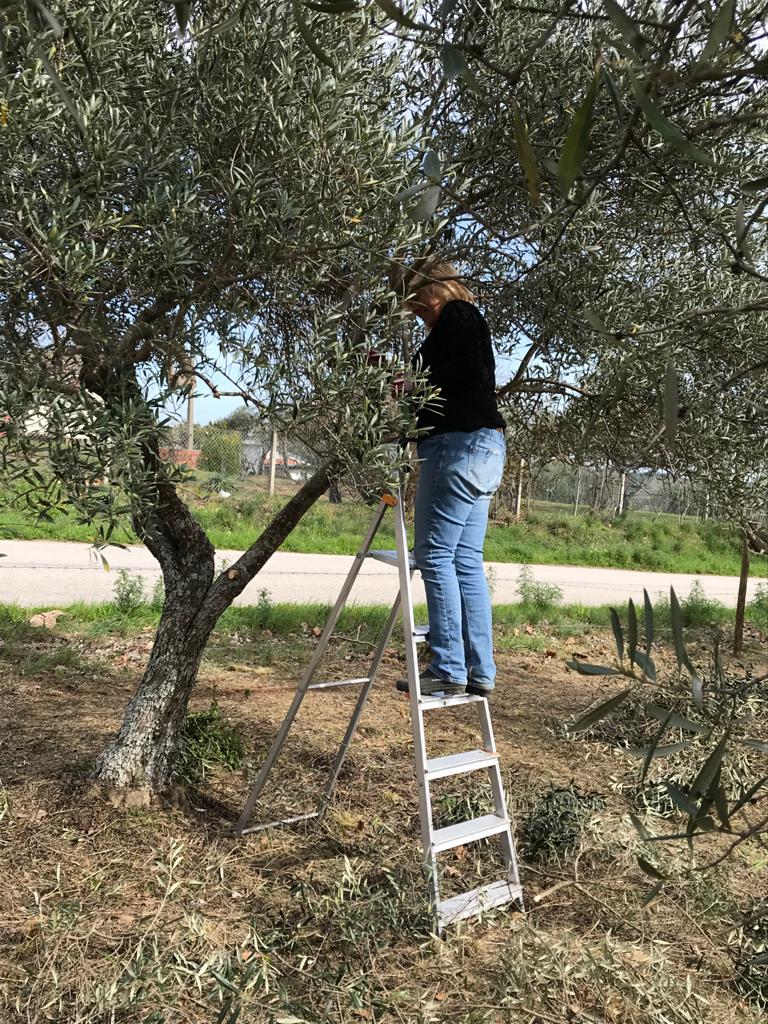
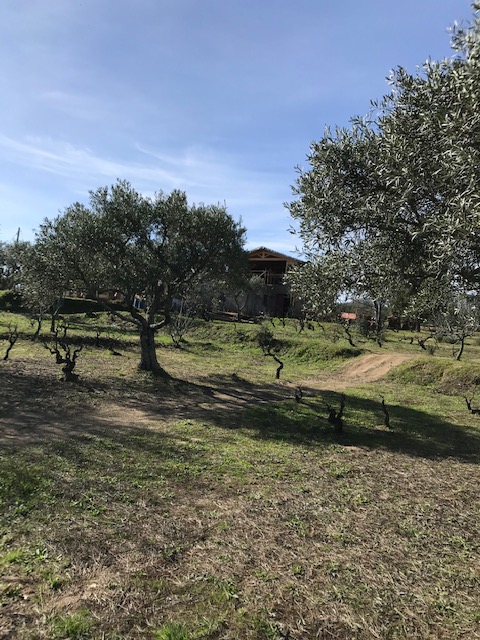
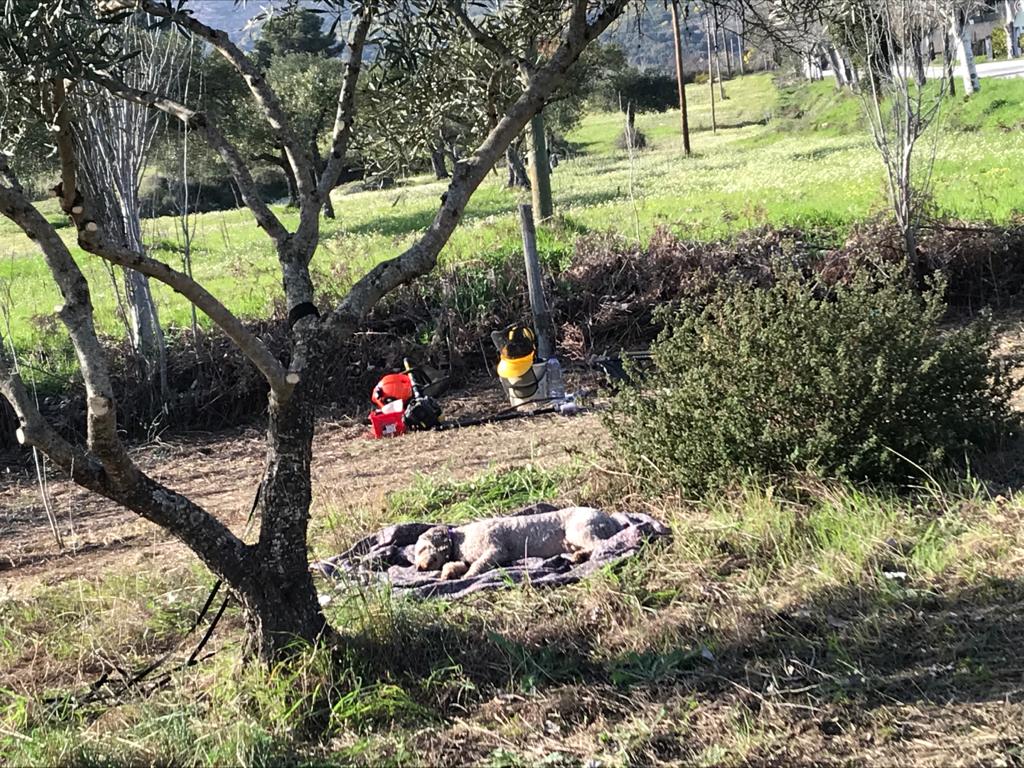
Way back when we first completed on the sale of the farm, we found that there was a little triangular patch of land opposite that also belonged to us.  It’s not very big but it does have several olive trees on it and a good supply of water which is always useful.  This little bonus also came with the task of clearing it.   The farmer who comes to see to his sheep has his land adjoining it and I’m sure that he must have been eyeing up the overgrowth and wondering when we were going to get around to doing something to sort it out.  Loading up the trusty ride-on tractor with the trailer full of gardening equipment, and with Wanda in tow, we headed over the road.  Wanda soon got herself settled down in the shade and despite the noise of the strimmer, lawn mowers and chain saw, slept soundly on her blanket.  In fact, there was one small patch that we had to leave until the very last as she was fast asleep and we didn’t like to disturb her.  We were quite pleased with the results of our labours and since it has been tidied up the farmer now seems to go out of his way to acknowledge us with a toot, a wave or a cheery Bom Dia.
During one of our regular video calls with Mark’s mum and dad, we were excited to show them how the land was coming along.  Ray is a really keen gardener and for years now has been growing bedding plants for us to put in our hanging baskets and borders – we’re going to miss them this year but have noticed some little marigolds growing so will think of his plants when enjoying them.

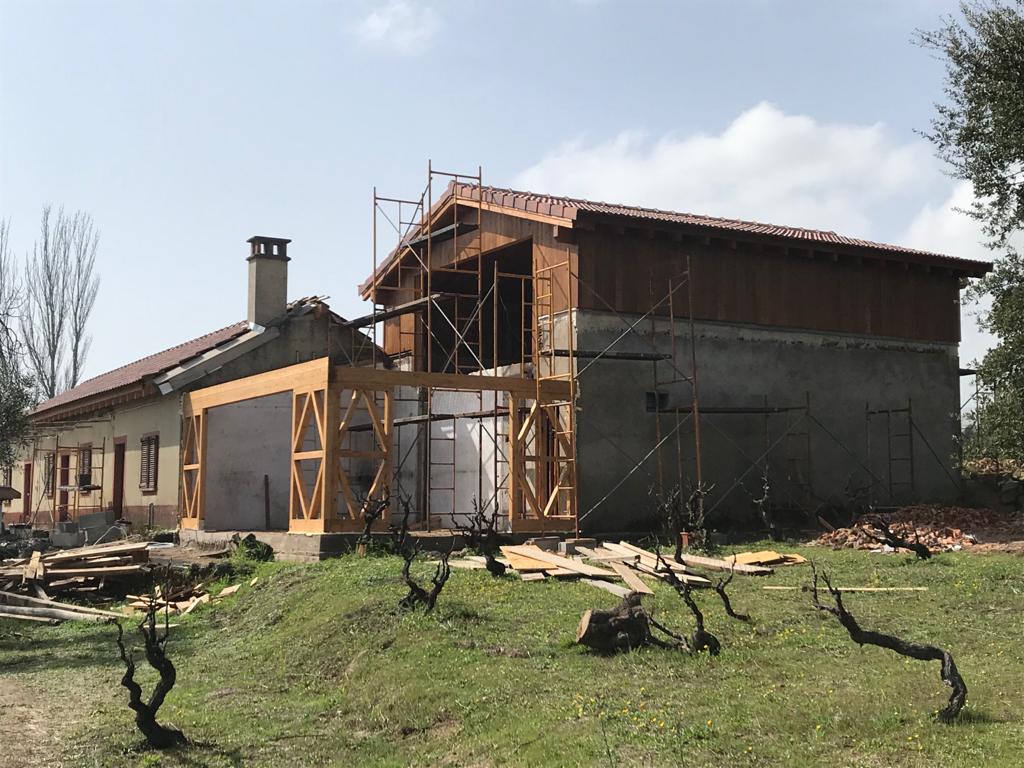
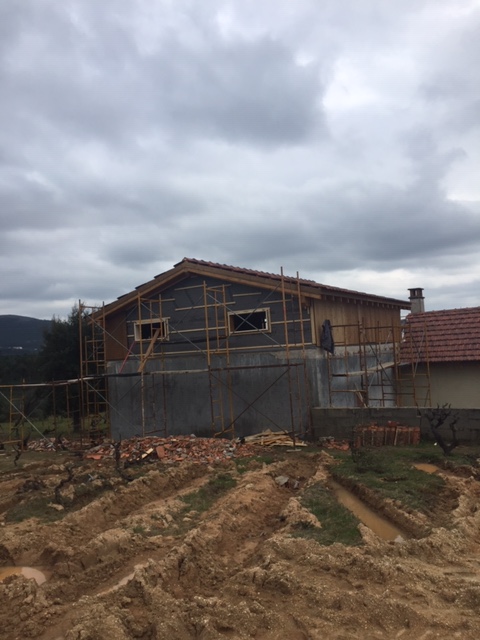
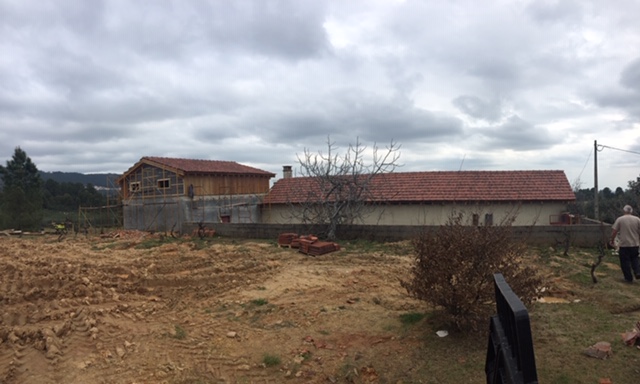
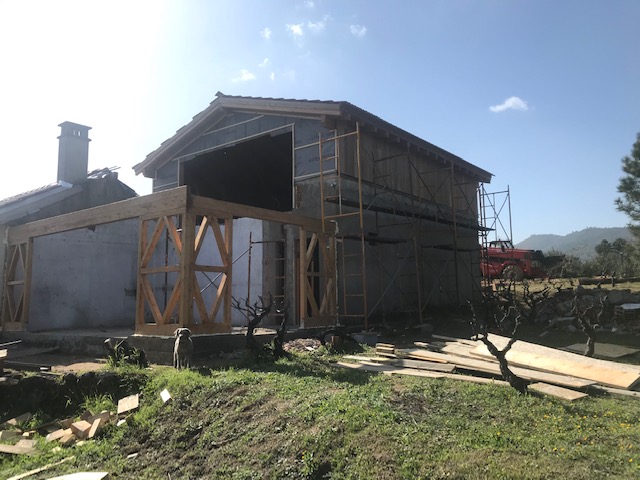
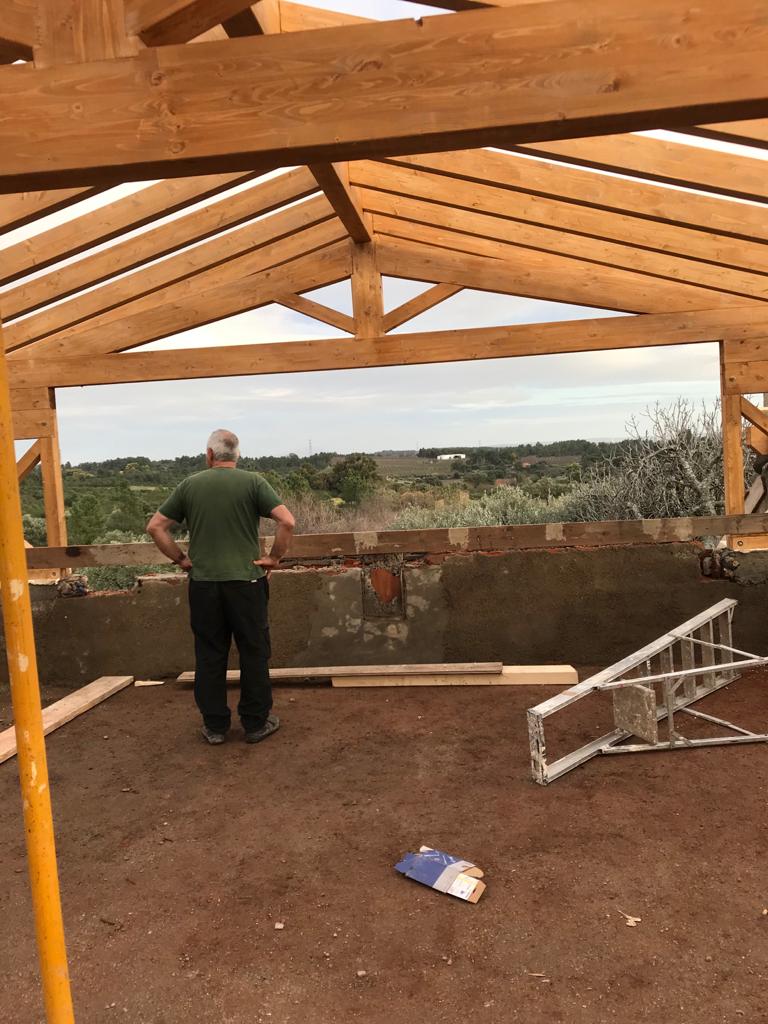
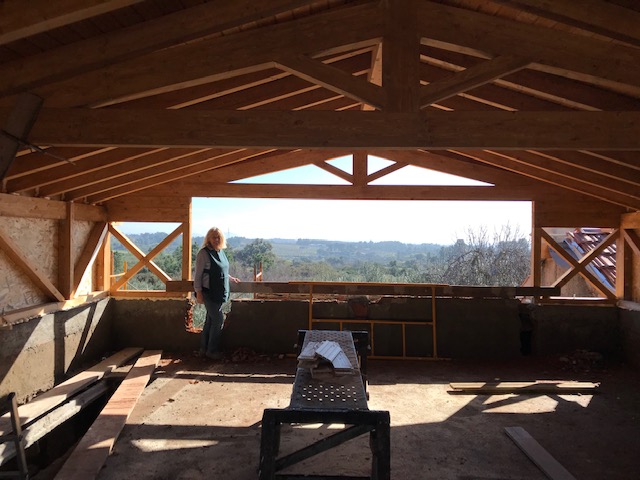
The last week has been another full on week with the build.  The hard work of the Ecositana team on the renovation of the long house has continued at pace.  All the barn extension has now been clad and the making good of the block wall beneath has been completed.  The RSJ has been fitted and the interconnecting wall from the living room extension into the old store has now been removed.  Work on the roof of the ground floor extension has also started. 
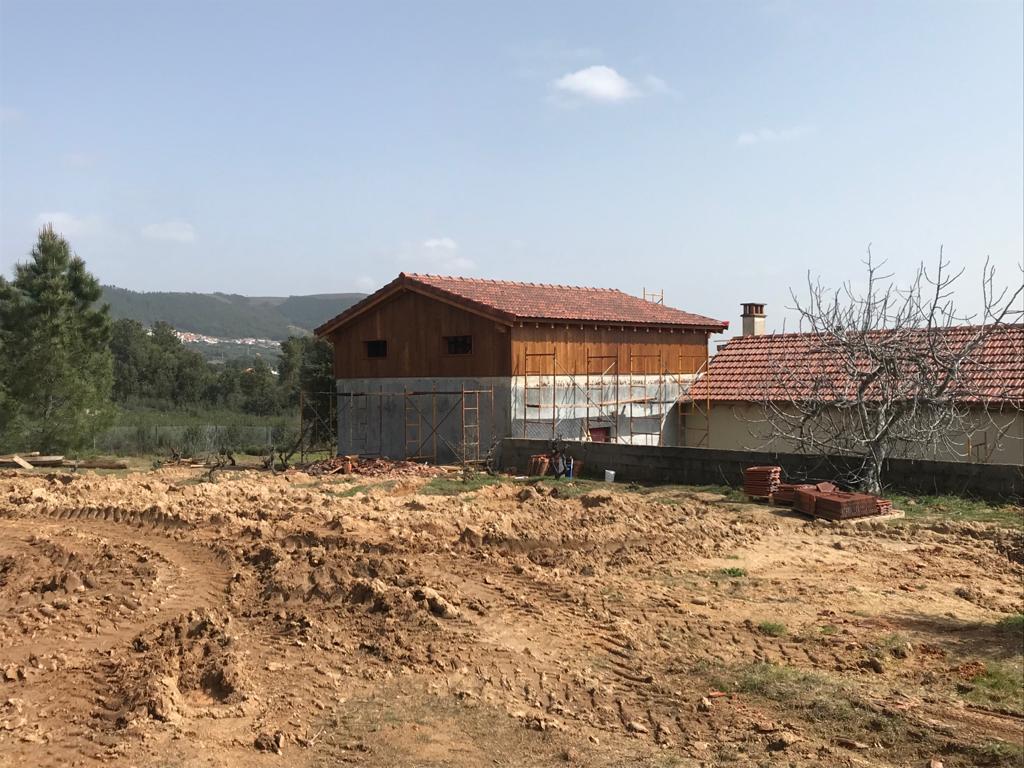
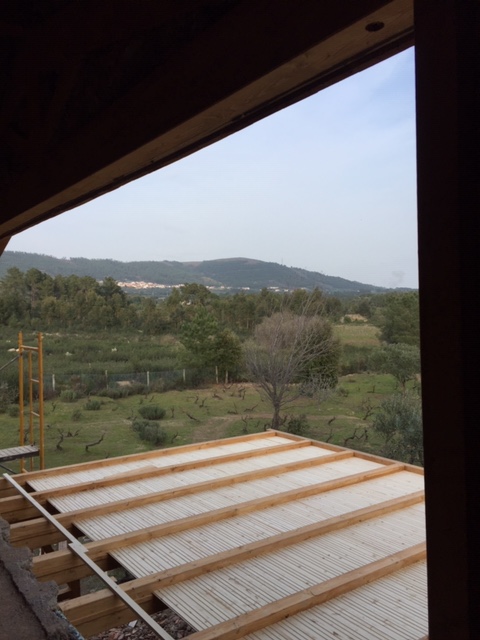
We still have our morning and evening strolls around the plot and love seeing the daily progress. We are particularly pleased with the roof tiles, they blend in so well and the finish is fabulous.  We can now see the views we will be able to enjoy from the balcony once the project has been completed.  It is going to be another busy week again this week with the electrician due on site and Ruivo, Carrega Barata coming to measure for the new windows.

To be continued …

Waste Not Want Not!

The saying, “waste not want not” can be traced back to the 1700’s and perhaps, with the current global crisis, it can be argued that it is even more relevant today. One dictionary definition quotes “If we don’t waste what we have, we’ll still have it in the future and will not lack (want) it.”

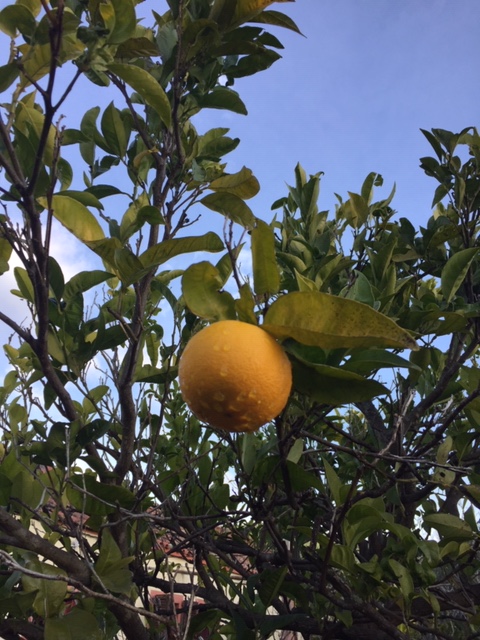
So this brings us back to our oranges. Hundreds of them. In an earlier blog, we mentioned the glut of windfall oranges and fruit on our trees and how we wanted to make good use of everything that we have on the farm. Our ‘champion juicer’ has been a superstar and we now have over 50 litres of orange juice stored in our freezer. It really is a fantastic little piece of kit and has already paid us back for the initial investment we made.

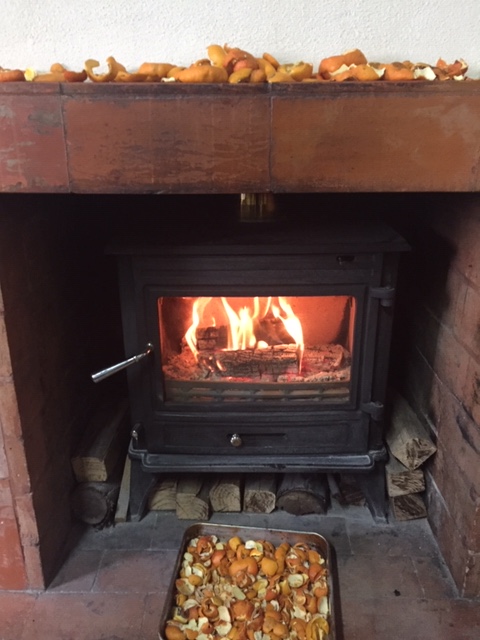
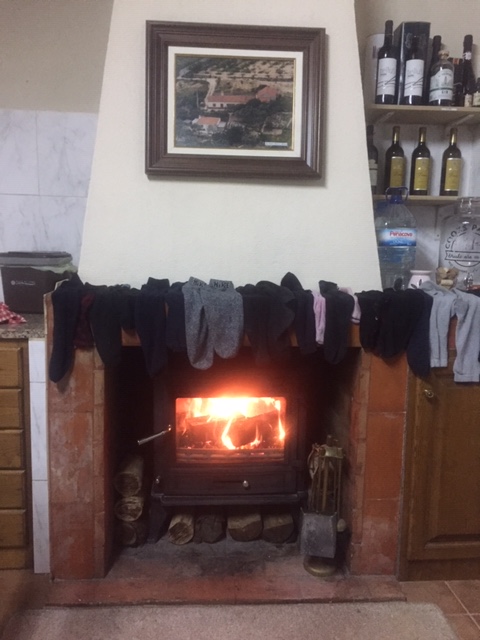
We’ve received lots of ideas from people suggesting different ways to use our fruit and we’ve had a go at most of these. It is true that oranges on a bonfire don’t burn and instead create little blackened balls in the remains of the ashes, which are no use for anything. However, we’ve found that if we put orange peel on the top of our fireplace, it gets really warm and as well as making the room smell lovely, it dries out and makes fantastic kindling.

As we have a 5 litre container of olive olive from the 2019 harvest that Linda and Andy picked for us, we have more than enough for our own needs so we decided to experiment a little.  I’d read once that if an orange is cut in half and the fruit removed without damaging the white stalk part,  the shell can be dried, filled with olive olive and the stalk used as the wick to make a candle.

We gave it our best shot at scooping out the fruit although it all got a bit sticky.  After allowing it a suitable length of time for drying out, we filled the little orange cup with our olive oil and lit the wick.  To start with it burned clear and bright but after about 10 seconds it just fizzled out.  Wondering if it was the oil or the wick that was the issue, I took out the middle of a tea-light candle and repeated the process.  No problem at all, we had a little orange candle for about 4 hours although I’m not sure if pinching the wick from the tea-light kind of defeated the object?

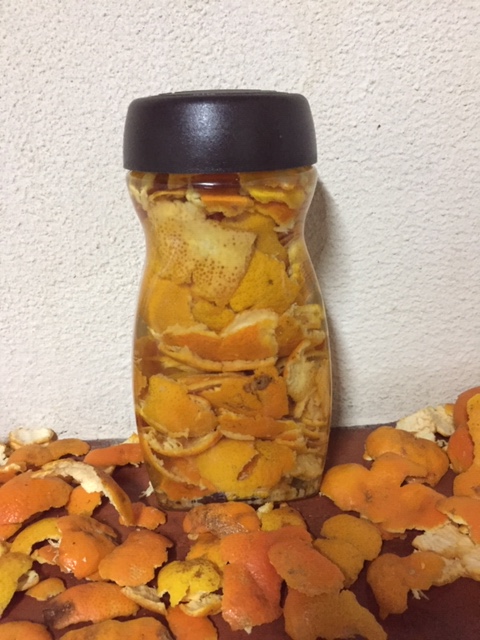
Next up on the list of things to try out was our home-made orange degreaser. I remember buying orange solvent for cleaning the kitchen back in the UK and swore by it, although at £5 for a tiny bottle, it was quite expensive. To make the home made variety I removed the pith from the orange peelings, put the pieces of peel in a glass jar and covered it with white vinegar. This will now be stashed under the sink for a couple of weeks for the citrus oils to infuse and then it will be ready to try. Watch this space …..

A few days ago I received an email from my Auntie Fay with a couple of recipes attached.  My Uncle Frank was famous for his soups at his local church and his main source of inspiration came from his little book of 400 soup recipes, I received two of these in my email : Watercress and orange and carrot and orange.  The watercress is still a working progress in the propagator but we tried the carrot and orange for lunch – delicious with a chunk of hot crusty bread and butter.

I also had a go at orange butterfly buns using the whole of an orange (peel, pulp and juice) to make the cake and flavoured the buttercream with orange.  I also made another sticky orange drizzle cake. 

Mark received a parcel from his daughter Helen and family last week containing his birthday present – included were some Kilner jars, a book about growing citrus trees and a recipe book for all things Marmalade. Having stocked up with sugar, grapefruit and lemon to compliment our oranges,  we will be putting this to good use later this week on a mammoth scale.

Meanwhile, while we were busy eking out our orange harvest, the Ecositana team were busy working on the main house.

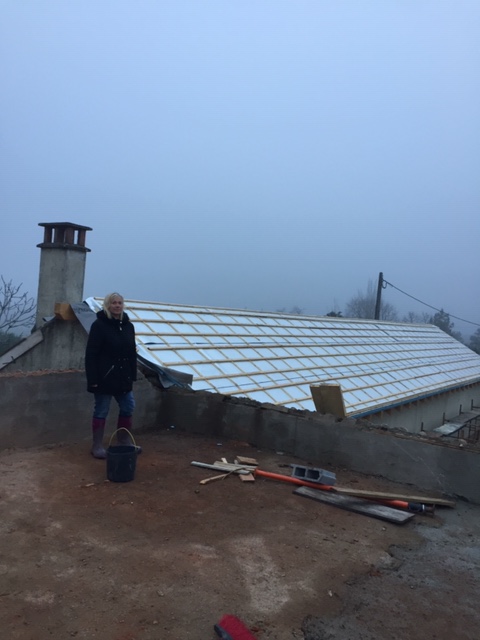
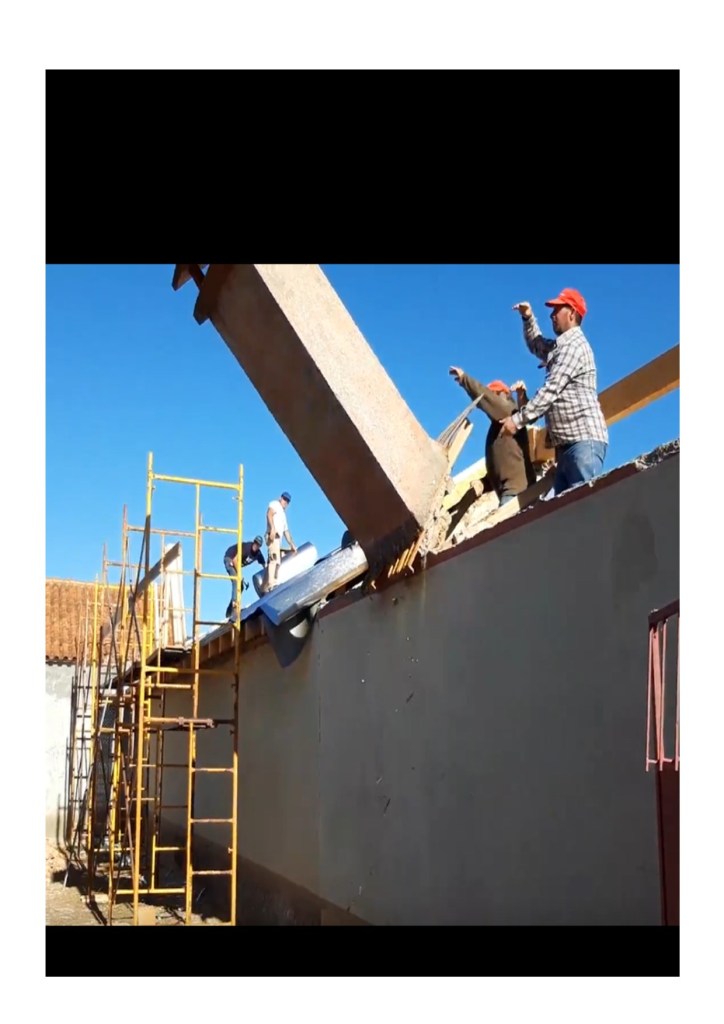
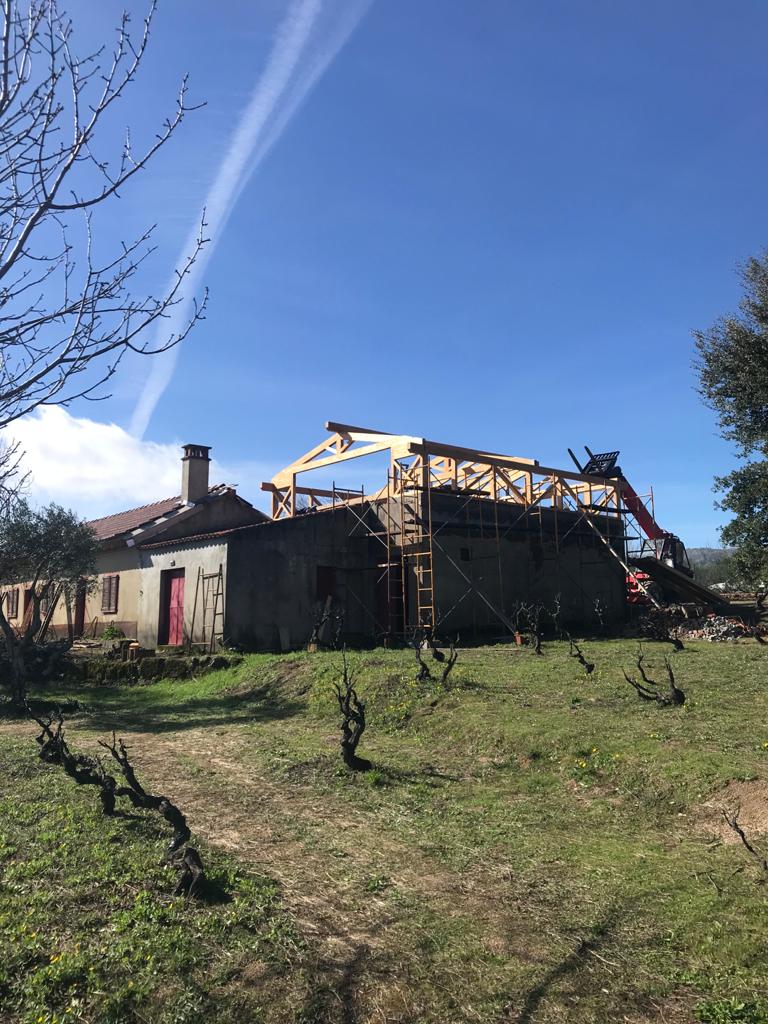
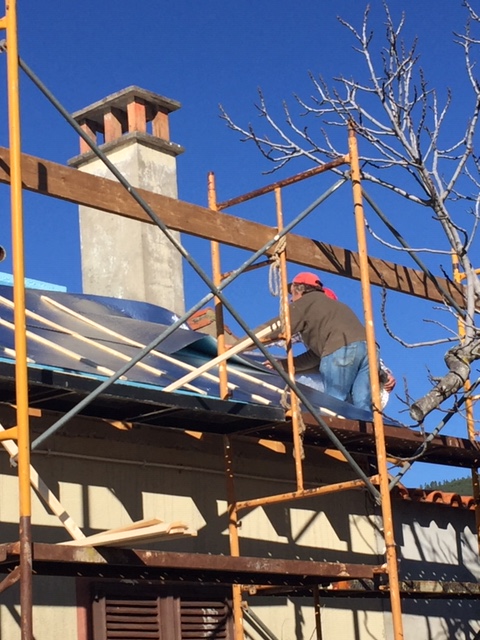
Both of the new roofs are 95% complete – we are waiting for the delivery of some finishing tiles for the apexes.  Although the cladding is only partially fitted on the barn extension, it is starting to look really impressive.  We’ve watched the team of builders majestically manoeuvring themselves on and around the roof – it seems an art form in itself to see them work so confidently at these heights.

The timber frame structure for the extension has now been erected and we are starting to get a feel for how the two buildings will connect.  Work has started on re-enforcing the wall before the opening can be made to make the old store and the new extension one big living space.  


On Thursday morning we woke up to find that we had a power cut.  Mark checked out the circuit board and it appeared that there was no supply at all coming to our property.  We contacted our electricity provider to try and find out if the problem was unique to us or something on a wider scale – unfortunately we struggled to get an answer to our question.  As the builders had been due on site, we contacted Raphael to let him know that we had no electricity and true to form he came to the rescue arranging a visit from the electrician.  However, before they arrived the power was re-instated and it seemed that there had been an area fault. 

Raphael, Antonio and Jose the electrician arrived at mid-day and although in the rain, we had a very productive meeting.  The plans for the revised electrical layout were discussed and agreed and we arranged for Jose to start work in a fortnight’s time.  We’ve decided that initially 50% of the electrical work will be undertaken at opposite ends of the house while we’re still making our minds up about the layout of the middle section. 

Linda and Andy stopped by on their way to take the dogs for their haircuts and brought us some chu chu plants which will be planted out near to where our veggie patch is going to be sited. Although we were having grotty weather it was a lovely to see them and have a quick socially distanced catch up – it seems so long since it was possible to move around freely visiting friends, exploring the countryside and enjoying a drink outside a cafe-bar. As foreign nationals we are still way down the line regarding getting the vaccine but we are sticking to the rules, keeping our heads down and working on the land until it is our turn.

STOP PRESS … We received the long awaited news that my daughter Amy and her husband Adam had safely delivered their first baby – welcome baby Rupert. Regrettably, due to travel restrictions, cuddles from his grandparents will have to be put on hold but we are so looking forward to finally meeting him.
The world needs more Trees

It’s hard to believe that already another week has flown by and we have been in Portugal for 3 months now.   There is such a lot to do and we’re finding that we’re jumping from one thing to another, depending on the weather and what is most needed at the time. 

Mark is spending quite a bit of his time mending the fences and repairing the holes where our night-time visitors get in.   We have around a dozen entry/exit points varying in size from something quite small to something very big and decided that it was time that we got these fixed.  Fortunately, when sorting out one of the old stores we came across a full roll of the fencing wire.  We’d also noticed a number of metal rods lying around the farm.  They were quite substantial in size,  approximately 4 metres long and varying in thicknesses and perfect for mending fences.  Mark had made sure his angle grinder was packed on the van when moving from the UK and soon put this to good use cutting the rods to size.  

The repairs were pretty straight forward to do, but at the same time very time consuming.  A patch for the repair first had to be measured and cut to size before attaching it to the fence with some thin metal ligatures.  Once in place, the metal rod was weaved through the fencing and sunk into the ground about 6 inches deep.  The fencing was also curled over under the ground so that if anything wanted to dig underneath the fence, it would first have to dig down before being able to get to the other side.  Hopefully this will be enough of a deterrent but something that we will be keeping a close eye on over the coming weeks.

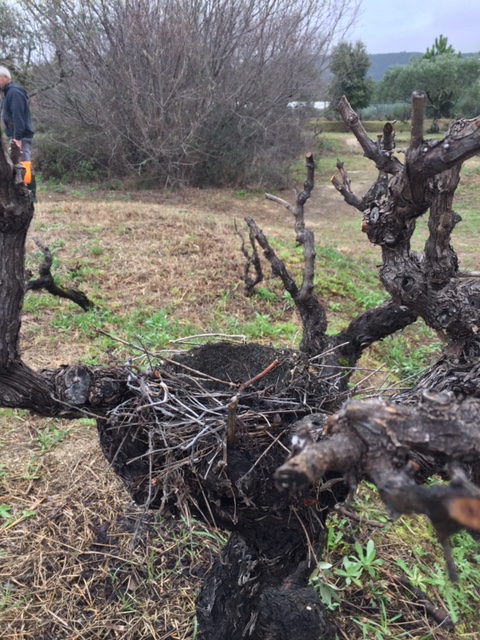
We’ve been really busy working hard on the land and finally feel that it is starting to take shape.  Out of curiosity we wanted to take count of the trees and vines on the farm and find out what we actually have growing.   We have 3 quince trees, 15 fig trees, 18 orange trees, 81 olive trees, 379 vines, 1 pear tree, 28 pine trees and 22 cork oaks.  We have a few willows, several poplars and a few others that at the moment we’re not too sure about. 

When saying that it is starting to take shape, we are under no illusion that there is an awful lot of hard work still to do, but for now feel quite pleased with ourselves that the land (apart from the wooded copse) has been cleared.  The boundaries are not exactly pretty but they are tidy and we’re not creating a lawn, we’re living on a farm.  The olive trees have all been pruned and the vines have all been trimmed.  It’s a very satisfying feeling.

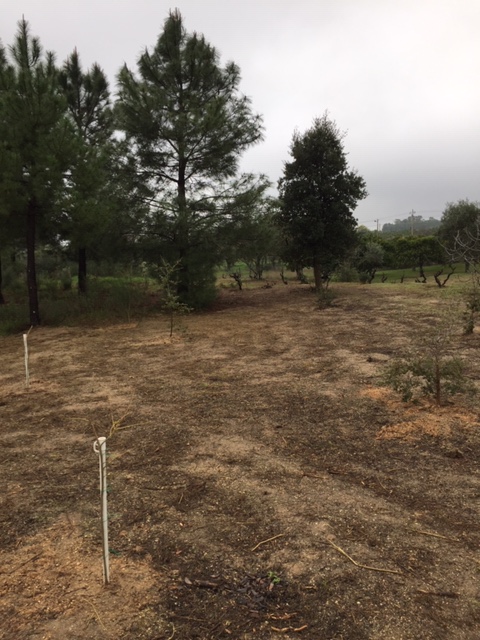
Linda and Andy have given us several trees, shrubs and plants and it has been a joy to get these planted out.  After clearing the land near the pine trees, we found that there was quite an area that was pretty sparsely planted.  The idea of extending the wooded copse to include other non fruit bearing trees, with wild flowers and grasses appeals to us and we plan to make this an area that attracts birds and insects to it.   There is quite a lot of lavender and some grasses already growing there although to be honest, not much in the way of colour.  Back in the UK when I used to make the hour long drive into work, I used to drive past several long grass verges that the council had filled with a huge assortment of lovely colourful flowers – poppies, cornflowers, daisies, chamomile and loads of others.  They looked so lovely and always made me smile.  I’ve always loved fresh flowers, I have a particular liking for yellow roses, but love all flowers and creating our own meadow for bees and butterflies would be so lovely.

This part of the farm is very uneven underfoot and it seems as though it has previously been used as a dumping area for pruned branches, cut vines and straw.  The pine trees have dropped their needles over the years and although it will eventually mulch down, it is going to take quite some time.  At the moment it is very springy to walk on and difficult to do anything with.  Another lesson in being patient!

As we’ve been clearing the land it has been necessary to take out a number of trees – sometimes because they were growing too close to another tree and fighting for space, other times because they were too close to the house and posing a risk to the structure of the building.  We felt sad that they had to come out especially as many were strong and healthy, but planting trees near the copse went someway to compensating for this.  We all know that trees are so incredibly important.  They give us oxygen, take in carbon, stabilise soil and provide homes for wildlife.  Trees also provide us with building materials and tools to do the building so we wanted to make sure that we not only replaced what we’d taken out, but that we added to their number, planting trees that are small,  so that we could see them grow as we ourselves grow in our new life. 

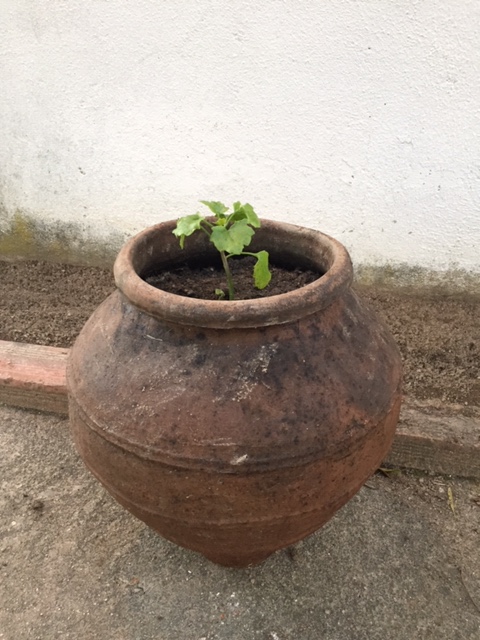
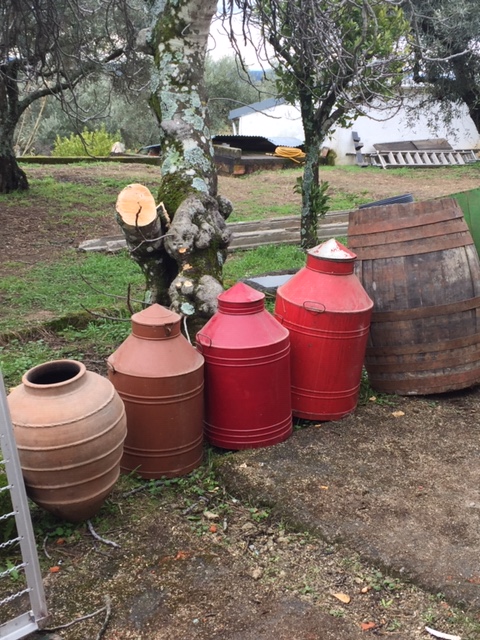
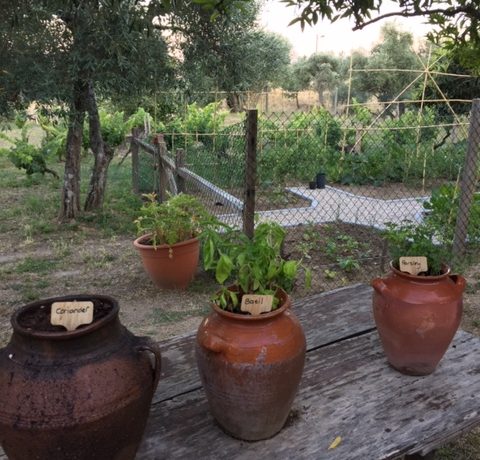
As well as relocating as many as we could of the ones we’d dug up, we also planted out our new additions – two paulownias, an Australian jacaranda, six hydrangeas and several rose bushes.  We’d found a number of terracotta urns when clearing out the old store so decided that these would make perfect planters and ideal for the geranium that we’d been given by the Hipwells.  The urns needed a bit of a jet wash first, but all in all came up quite well.

It had been three weeks since we’d stocked up with lockdown essentials and our supplies were getting very low.  As we prefer to shop when the stores are less busy we set off early one morning to buy enough to keep us going for three more weeks.  Our Portuguese language is definitely not progressing as quickly as we had hoped.  We’d planned to take lessons to help us communicate in the national language of this beautiful country.  Covid-19 has put a halt to that idea so until that once again becomes an option, we are looking for other ways in which to learn.

We’ve always written ourselves a list when we go shopping so we don’t forget anything – we’ve now started to write the list in both English and Portuguese so that we can remember at least some of the basics and hopefully as the weeks go by we will increase our vocabulary. 

Having made up our minds some time ago to buy an unfamiliar item each time we shopped, this weeks purchase was an Annona, a heart shaped fruit with a pitted pale green skin.   As it was ripe, we didn’t have to wait to eat it, but we read that if these are not quite ready to eat when bought they can be kept for 2-3 days in the fridge.

 We cut it in half, scooped out the creamy flesh and discarded the skin and the black seeds from the centre.  

It’s reported to be very high in fibre, vitamins and minerals so comes with added health benefits.  There are quite a lot of recipes suggesting ways in which this can be used ….. fruit salads, smoothies, mixed in yoghurt or even salad dressings.  We ate it chilled with a spoon – it was sweet, smooth and really did taste like custard, which is why it is also aptly known as a custard apple.

 Would we buy it again?  it’s quite expensive but definitely a yes from us.  We collected the seeds and will have a go at propagating them. Apparently they are also well liked by slugs and mealey worm so will see how we get on – watch this space …..

While we were out shopping, we also took the opportunity to call in at a garden shop to pick up some things that we needed.  We bought some seedling trays, a propagator, some pots, compost, copper bactericide and strimming chord. 

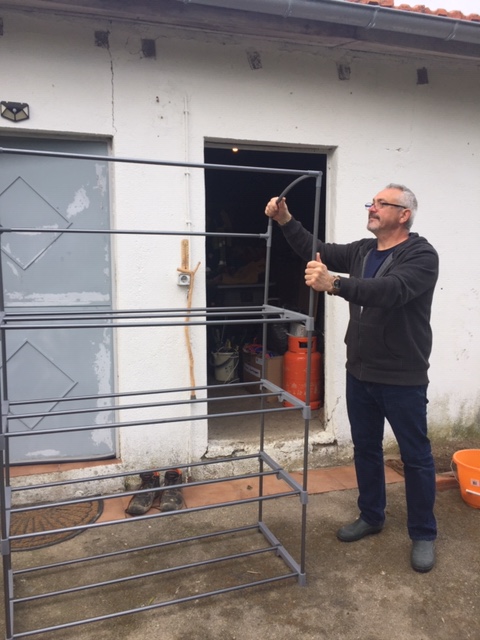
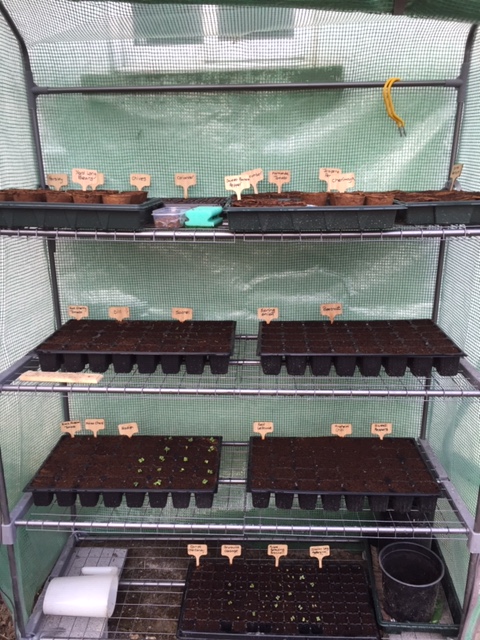
I’d been given an assortment of seeds as a Christmas present and now is the perfect time to get these planted. There are seeds for salads, fruit and vegetables so once the propagator was packed in the car I was really excited to get it home and set up.  Mark put the framework together and I turned our kitchen table into a potting shed.

Learning from the mistakes we made last year which resulted in about 200 lettuce plants all being ready at the same time, we split the packets and will be doing our sowing in batches.  First up was a selection of herbs – coriander, parsley, dill, basil and chives and a variety of vegetables including broccoli, aubergine, cherry tomatoes and cabbage.  These were suitably labelled, watered and placed into position on the shelves.  I had a facetime call with my friend, Nadene, who is also a keen gardener.  She’d been listening to a programme with Alan Titchmarsh and learnt that potatoes seed very well if placed in an egg carton in the dark.  In the absence of seed potatoes, I did just that and will be carefully watching for signs of shoots in my little cardboard container. 

This week has brought with it a few rainy days and the Ecositana team reviewed their plan of work so that they could maximise the dry weather, working inside at the factory when it was wet outdoors and outside on the farm when it was brighter.  Raphael has once again been a font of knowledge, sending information about the options for insulating the property as well as sharing his network of contacts so that we can start getting quotes for electrical work and replacement windows. 

The big question facing us related to the fly screens on the new doors as the openings will be 4 metres wide and 2 metres high.  We wanted to check these out for ourselves at the factory so headed off into Castelo Branco to Ruivo Carrega Barata on the zona industrial to meet with a lovely and extremely helpful man called Orlando.  He took the time to explain in great detail the profile options of the windows and doors and demonstrated the thermo properties of the double glazing units that he has quoted for as opposed to a standard unit.  Lots to think about, but we’re moving forward in the right direction.  Apparently, once we have made our decision we can take delivery in 2-3 weeks.

Back on the farm, the building work has moved forwards at quite a pace, despite the poor weather conditions.  The barn now has a fully tiled roof and we are extremely happy with the way in which this is in keeping with a more rustic look.  The old store is now no more having been removed and work on the foundations for the new lounge has begun.

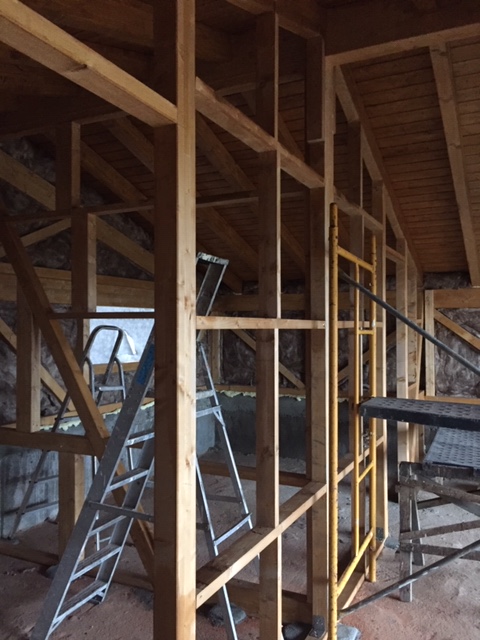
In addition to the external works, Antonio has generously created for us an internal partition framework separating the bathroom, walk-in wardrobe and bedroom.  These rooms are much bigger than we first though they would be.  We are delighted with the outcome and looking forward to the day we can move in!    

Sunshine After the Rain

Still so pretty – even in the rain

Someone once told us, that Portugal doesn’t get much rainfall, but when it comes – it comes! 

The rain came …… and stayed with us for five days albeit with varying degrees of intensity.  The little brook that weaves down from the water mine, along past the olive trees and onto the orange grove now closely resembles a fast flowing stream and we have our own water feature where it disappears under the fence and onto the land next door. 

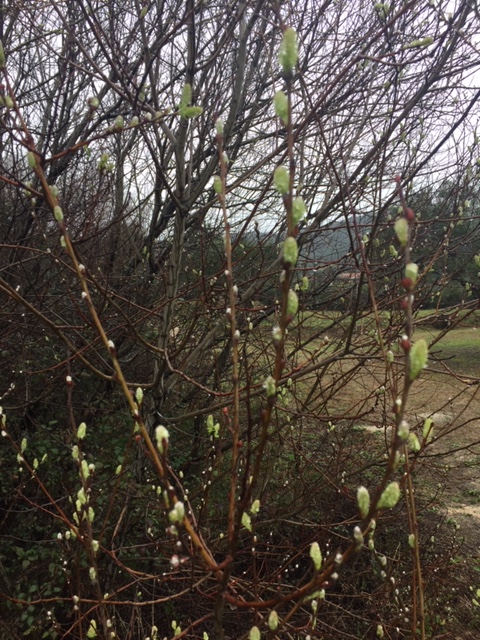
With the rain has come new growth and all around we can see the first little shoots and buds of the year,  as though heralding the advent of Spring.  The grass does grow at quite a fast pace and now that it has nearly all had a good cut, it is a joy to see the land starting to look cared for.  We trimmed back some of the trees that were heavily overgrown when we first arrived and these are now bursting into life.  It was really more by luck than design as we needed to clear a way through for the little tractor so we chopped off the bits that were in our path.  However, it is as though they have appreciated our efforts.  The lavender too is showing its first signs of colour, the vines have signs of new growth and our big fig tree (the one I am so reluctant to take down) is boasting tiny little figs. 

There are a number of daffodil plants directly outside of the annexe.  My Mum used to love daffodils and pussy willow together in a vase and I smile thinking how much she would have been in her element here on the farm.  Our plan is to recreate this as a tribute to her.  We have a willow growing on the edge of the brook and we sent a photo to Matthew Pottage at Wisley RHS to ask if he would identify it for us.  We also wanted to ask his advice on the terrace banks as they seem to be collapsing in places where we have taken out a lot of the weed.  The answer to our queries came back within a couple of hours – our willow is probably a goat willow (and is pretty much a weed) although I still think it looks pretty.  Matthew recommended that we invested in some creeping rosemary and blanket plant this, or a Myrtle, to help stabilise the banks.  He also suggested that we might want to think about using railway sleepers to create two or three terraces and plant around these.  It wouldn’t be practical to do this on a large scale but I do like the thought of having a pretty little garden area and think this would be perfect for this.  Something on the back burner to re-visit at a later date.

The Ecositana team, although unable to work on site while it was raining were busy making the new wooden structures for the barn in their workshop. The new roof has been a blessing, protecting the end wall and our belongings from the rainwater.  There is a small gap where the new building will meet the old one and the driving rain had managed to get inside and made quite a puddle, but thankfully there is no sign of any damage to the internal wood. 

While we were confined to working indoors, we busied ourselves looking at plans, working out were the internal dividing walls will be and researching types of windows.  My favourite pastime at the moment is going up to the longhouse and trying to decide on the design of the kitchen and the decor for each of the rooms.  It seems way down the line at the moment but everyone needs a goal!

Portugal remains in lockdown until at least 15th February, with the general feeling being that this will be extended for a number of weeks.  We can only travel for essential purposes and have 1pm curfews on a weekend.  All three of us desperately needed a trim so we decided to try our skills at hairdressing. 

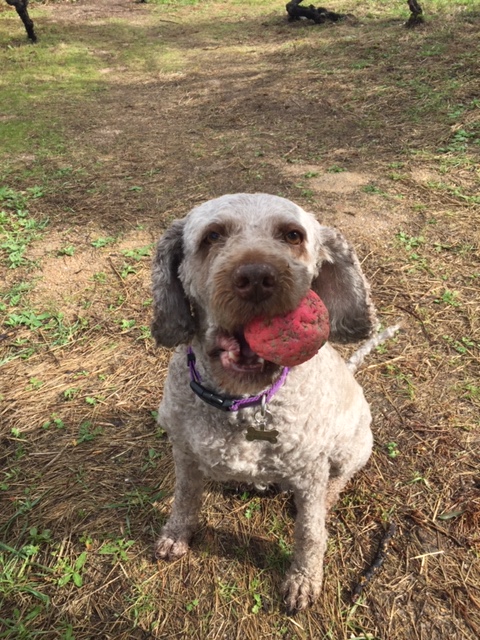
First up was Wanda.  For anyone who is unfamiliar with the breed, The Spanish Water Dog is classed as a medium sized dog with a thick curly coat and if left uncut, her hair will grown into long thick woolly chords.  A lot of people mistake her for a labradoodle although the history of the Spanish Water Dog goes back hundreds of years.  They were originally bred as gun dogs to retrieve prey and flush out game.  Most Spanish Water Dogs, as their name would suggest, love water.  When Wanda first came to live with us she was extremely wary of any water – the sea, rivers, ponds or puddles – you name it, she was frightened to go anywhere near it.  It took a lot of effort and perseverance but eventually we got there and she’s much more comfortable these days, even going in for a paddle from time to time.

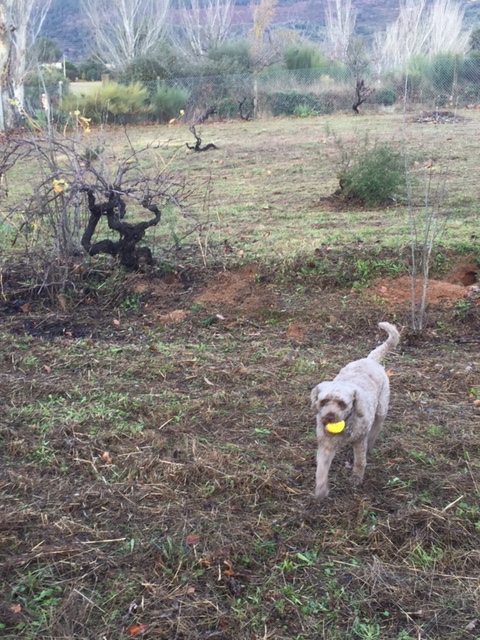
Back to the haircut.  Her hair has been getting thicker and longer and we’d noticed she was getting very warm and panting a lot.  Having invested in some Andis dog clippers, an assortment of blade sizes and some cooling oil spray back in the UK, we were all set to go.  Wanda was a little sweetheart and stood really still while we cut her curls.  We had to keep checking that the blades were not too hot and giving her lots of cuddles but after around an hour we were quite pleased with our first attempt.  Wanda dashed outside to play ball and obviously felt much more comfortable.


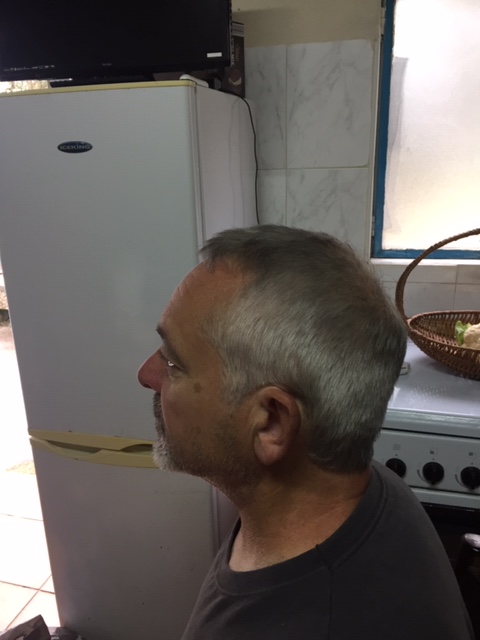
Next it was Mark’s turn – we also have some hair clippers for him so we chose a size four cutter and set to work.  He hasn’t got as much hair as Wanda, so was all done in 15 minutes.  He thought I’d done an ok job so I decided to trust him with the scissors (I didn’t really have an option and figured if it went wrong it would always grow back).  Mine took a bit longer, with a lot of direction from me but with two inches off I was all done too.

Despite the extremely wet weather,  it was also surprisingly warm and when we were able to get outside there was a pleasant earthy musk as we walked the around the farm.  The lavender smells lovely when the rain has fallen on it and the Cistus has a rather unusual but pleasant, almost fruity fragrance.  I remember being here when it was in flower, a beautiful delicate white. 

Although we both envisaged the need for flip flops as opposed to wellies, we packed our boots all the same and were glad that we did.  The water mine is overflowing and a large part of the bank has collapsed and fallen outside the entrance.  Another job to add on the to-do list. We have noticed that the water from the tap is cloudy so we have been collecting our drinking water from the communal fountain in the village, just to be on the safe side.  We have made a mental note that we need to find out about the process for getting mains water.

Wednesday morning, the sun had was shining and Ecositana were back bright and early.  The preparation in the workshop certainly paid off and by lunchtime the roof apexes and the trusses’ were fixed in place.  If anyone had told us at the beginning of the week that by Friday afternoon we would have the barn walls built, the roof and openings for the windows in place, the vaulted ceiling up and the waterproof membrane on …. We would have queried their optimism. 

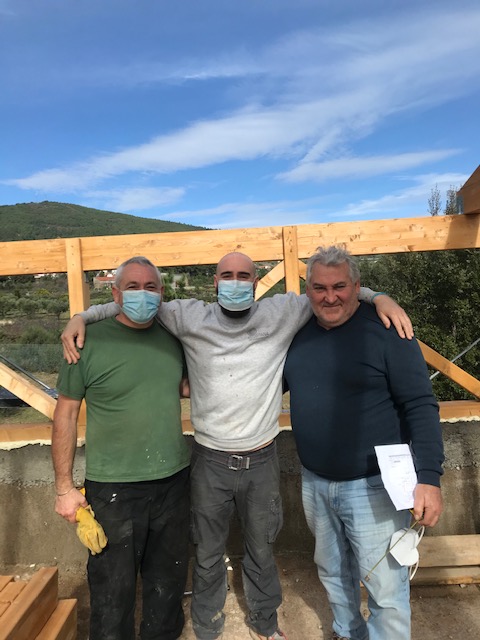
We’ve got a really good working relationship with Antonio and Raphael. We can hear Antonio loudly giving instructions while they are working and have it on good authority that his nick-name is the Sargeant! He’s also a very knowledgeable and gentle man and has immense pride in their work. Raphael has been our conduit between us and his dad and has also demonstrated an in-depth knowledge of not only the construction of buildings but the considerations that need to be made given the geographical location of our farm. He constantly offers impartial advice and is more than happy to help us obtain quotes and estimates for other materials and skills that we need.

This has given us great comfort and confidence as the renovation has progressed and we look forward to the end results and being able to share it with our friends and family.

Sharing our Home

We arrived in Portugal two months ago with the misconception that there would be just the three of us occupying Quinta Vinha das Almas and that we would be spending the next few month by ourselves, socially distanced and renovating our farm.

Morning walks and working on the land have taught us differently. One of the things we most love about living here is the absolute peace, quiet and tranquillity. We can hear the sheep bleeting across the way on the farm opposite, and near the Gardunha’s a donkey brays from time to time, but other than this, for the most part there is very little noise. Maybe the odd car now and again and the farmer shouting his sheep in at nightfall but that is literally it.

However, we hadn’t been here very long when we learnt that we were sharing our new home with a quite a few co-habitants.

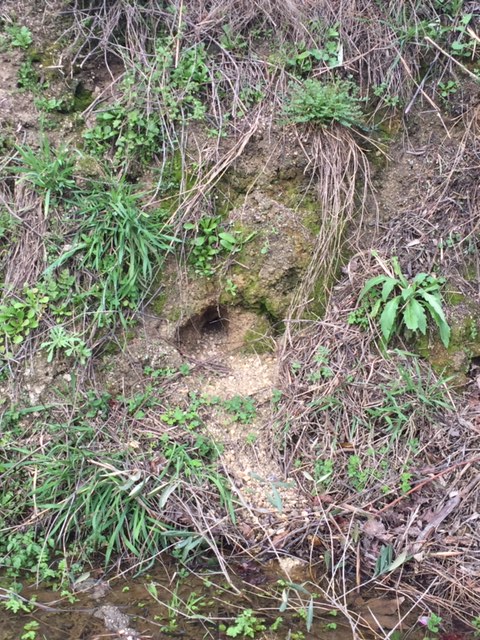
When strimming back the brambles and weeds on the terraces we noticed quite a few holes in the bank and wondered what had made them. We puzzled over why our terrace was peppered with random little holes, about an inch in diameter and tried to imagine how they had come to be. Suddenly, we saw something moving quickly into one of the holes and there we had it, a seemingly full housing estate of Fieldmice! living on the bank, near the brook and with a bountiful supply of fruit, seeds and nuts right on their doorstep.

We started to take much more notice of our land and the sounds, sights and smells around us. The birds with their beautiful morning song, little ant hills dotted around the terraces, rabbit holes heading deep down underground, the empty birds nests in sometimes the most unexpected places and long ridges in the soil where moles have furrowed under the ground, not quite breaking through but leaving a bumpy trail as they have travelled along. Sometimes we see the footprints and rooting of something quite large, probably wild boar foraging for acorns or olives or even trying to sniff out the moles.

We’re enjoying learning to appreciate the creatures around us and living peacefully with them, side by side. We all have our paths to follow and can do this quite harmoniously most of the time.

We could hear some dogs nearby this morning and guns going off. As we walked the plot, two hunting dogs went trotting along our boundary fence. It seems to be quite the norm for the hunters dogs to roam and track the wild boar. Wanda seemed to be un-phased by their presence although her instinct seemed to kick in and she was intensely focussed with her ears raised on the dogs and nearby sounds. We were mindful that we do have some holes in the boundary fence so kept Wanda close by us in case the dogs strayed onto our farm.

However, despite being happy in sharing our land with the animals, we’ve found the tell-tale signs that we have got a trespasser in one of our store buildings. We’re not sure if this is a new visitor or a previous one that Mark disturbed when clearing out the animal shelter, but we have definitely got a resident rat.

We would be quite happy for it to find a little spot for itself out on the land somewhere but moving into our building just isn’t at all acceptable and we knew we had to do something about it.

We had a choice of rat pasta or rat rice, so we bought some of each. We set a couple of traps, scattered the bait then left it overnight. The next day we checked the storehouse. The traps were empty, the rice and pasta had all gone and there was more than the usual amount of rat droppings. The next few days saw us repeat the process over and over again. Each time the rat was well-fed, poo’d a lot and avoided the trap.

The Ecositana team are ready to start working on the roof of the store so we needed to move anything that may get damaged out of the way. The rain had stopped, the ground was starting to dry out and reluctantly, I saw this as an opportunity to check if there was a rat nest tucked away in the store. We started moving things outside into the sunlight coming across a lot of little treasures and curiosities that we’ve carefully put safely to one side.

We found a huge pile of Portuguese crockery, several terracotta urns of various sizes, some metal milk churns, cooking pots, copper pans, a beautiful salmon poacher, an early 1900’s cast iron, several ornate port glasses as well as a couple of carved wooden chests, some wine making equipment and the trailer to fasten on to the Japanese Buffalo.

We did find a small amount of shredded paper in a box but other than that, there was no sign of Mr Rato. We will keep a close eye out for signs of his return but hopefully he has moved on his way and won’t be calling again.

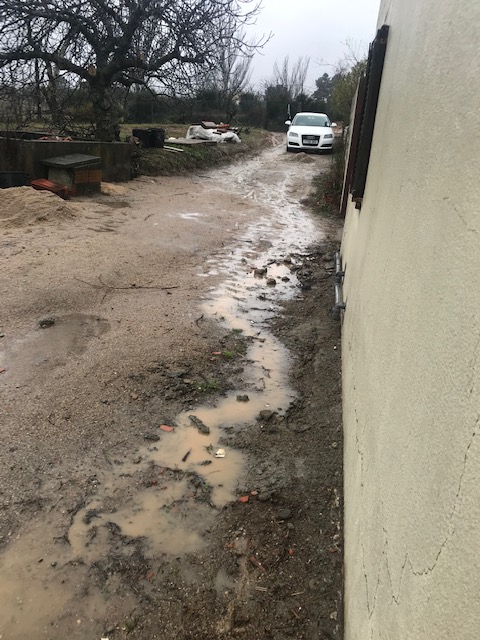
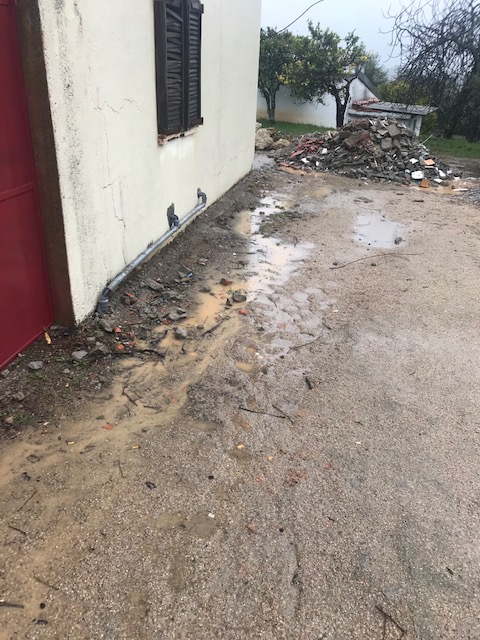
The new roof and the building work has continued over the past few days although at a much slower pace due to the adverse weather conditions. Our farm is definitely a building site with the rain filling the deep furrows made by the crane in a few hours. At one point we had a torrent of water weaving its way down from the main gates, past the olive trees and down the bank outside the annexe. This answered another puzzle as to why part of the terrace wall had collapsed – it appears that when it rains intensely it flows down to that point and causes the soil to wash away. Mark is undecided what to do about this but perhaps installing some irrigation pipes to divert the water may be an option.

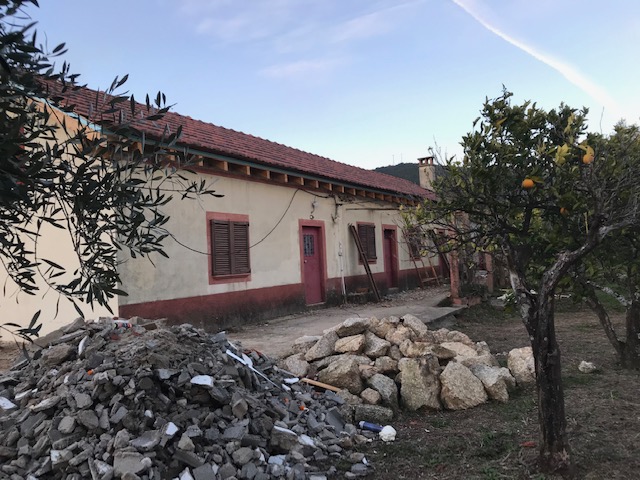
The roof of the longhouse is very nearly complete, just a couple of bits left to do and already we have noticed a difference. Inside we get the impression that the rooms feel less damp and don’t smell as fusty. As the roof tiles have a significantly increased overhang, this improves the deflection of rainwater away from the walls so they don’t get as wet. We are hopeful that this will all contribute towards making it habitable and a comfortable living space.

Once the roof is complete we are looking forward to the work continuing on the barn so that it also has a new roof and it is a step nearer to us living in it.

Oranges Don’t Burn

The weekend was a bit of a slow starter where we walked with Wanda around the farm, throwing her ball and finding the ones that we’d thrown previously and she’d lost! She’s really good now at working out where the stream is and is able to leap over it without any hesitation at all – it could be said that she is becoming a proper little farm dog.

The Ecositana team do not work on a Saturday so we took advantage of their absence and climbed up onto the roof of the barn to check out the views we’ll see once the bedroom and balcony have been built.  We could see right down to the farthest part of the Quinta and for miles beyond it.  The long winter shadows created a dark contrast against the bright green grass that is now starting to appear and is replacing the weeds and brambles that covered the terraces when we first arrived. 

The Gardunha Mountains looked magnificent with the rugged terrain, abundance of trees and many water courses snaking their way down the mountainside.  We could see that some areas on the mountain were less dense, maybe because of the raging fires that had engulfed much of the area over recent years. There are a few small roads that look as though they offer a route over the top and we decided that when we are able to start to move around more freely, we would take the opportunity to go off for a drive and explore.  It would be great to find some beauty spots to show our friends and family when we can finally have visitors come and stay.  

Closer to home, we could see nestled in the foothills the orange roof of a building and further along a large white house.  A small village reaches out along the mountainside and we wondered what it was called and whether there may be any restaurants or shops there that we can visit once the uncertainty of the pandemic has declined.  


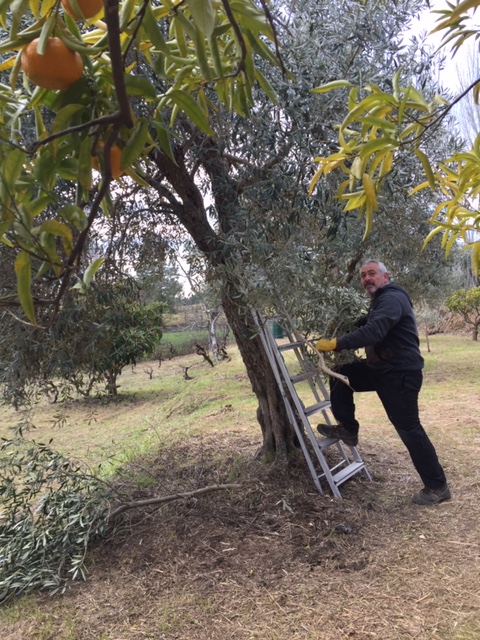
The task for today was to carry on with the olive trees, cutting them back, this time making sure that our equipment was carefully sanitised. We got stuck into pruning the trees outside the longhouse as we try not to work here when the builders are on site. Scaffolding has been erected along the front of the main house stopping outside of the kitchen near the big fig tree which seems to be a hindrance to anyone wanting to work anywhere near it.

Mark found his chain saw and cut back one of the large branches that seemed to be the most obstructive. We had originally thought that the tree should come down in its entirety as we had noticed some damage to the paving nearby. But, for now, with its little trim, it has managed to buy itself a bit of time.

We packed up around 3.30 and had a zoom call with friends.  It’s great to catch up and hear how things are going in the UK.  It is all very worrying. Zoom certainly seems the way to go at the moment as it doesn’t seem likely that we will be doing it in person any time soon. 

In my pursuit to find new ways to use some of our oranges, I tried out a recipe for orange cake with a sticky orange topping – extremely tasty, especially served warm with with vanilla ice-cream and very easy to make.  I’ve decided that I will create a collection of our favourite recipes.  I think at the moment, they will be primarily orange-based due to the seemingly endless supply of the fruit but maybe when the figs come into their own, this could change.

Saturday night was probably the wildest one that we’ve had since being here and not in a party way!  The wind took a sudden turn for the extreme and carried on throughout the night. 

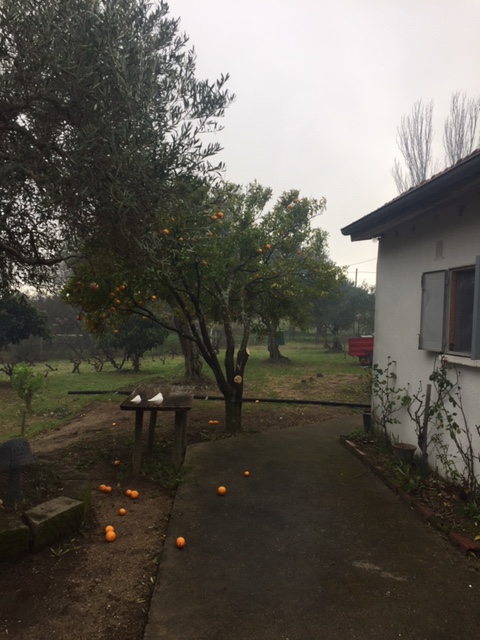
We have an orange tree, laden with fruit at the back of the annexe and as it is on the terrace above, the branches overhang the annexe roof.  At around 2am, we were woken with a start when the wind blew the oranges off the tree with a bump, bump, bump down the roof until finally they fell on to the path with a thud outside of the annexe door.  This at any time of the day would sound loud and in the middle of the night sounded so much worse.  Wanda was not in the least bit happy and when the metal shutters flew open and banged against the wall it was the final straw for her and she shot off her bed and straight up on to ours!

Morning arrived and we opened the door to be faced with bright sunlight and scenes of the morning after the night before.  Branches, twigs and cuttings were strewn across the terraces and more noticeably were the abundance of windfall oranges on the ground extending right down to the orange grove.


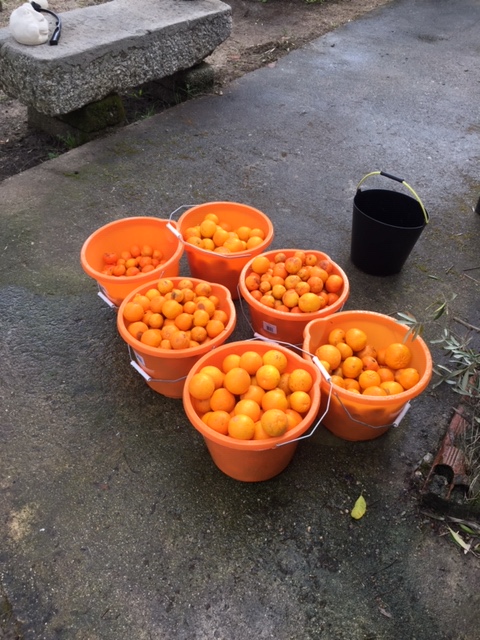
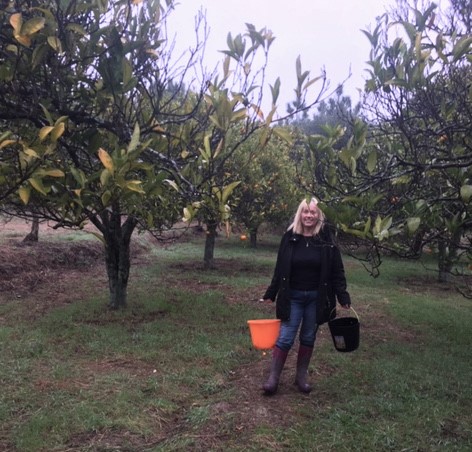
Then began the morning task of gathering up the fallen fruit – today was a bumper harvest resulting in 6 buckets from the orchard and a further one collected later from below the other trees on the farm.

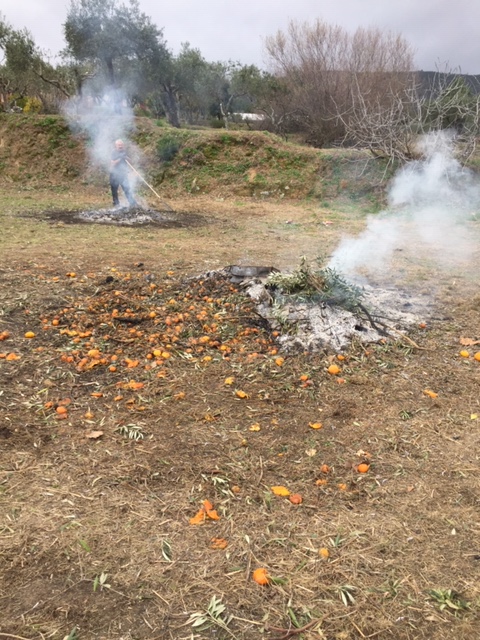
While I was busy foraging, Mark was busy attending to lighting a bonfire.  He knew it would not be an easy task as the rain we’ve had over the past few days had made the piles of branches quite damp.  But we’d phoned to book a fire and knew that if it didn’t happen today, we would have to start the process of booking another fire all over again.

We’d brought with us from the UK a gas powered weed burner which we thought would be really useful for starting fires.  It was something that we have used twice before and in the past has worked very well.  Not so this time.  For a while a small clump of dried grass or some leaves would spark up a flame and burn for a minute or so, then fade out.  Getting more and more frustrated, we used up all of our three gas cannisters.  As a last resort, Mark eyed up an empty cardboard box and half a box of firelighters.  I could see he was undecided whether to try them but he went for it anyway.   Within a couple of minutes, and very much to his surprise, the bonfire was ablaze in no time at all.  He still can’t get his head around how a sustained and intense gas powered flame was outdone by a couple of firelighters and a small pile of cardboard.

Once the bonfire was finally esablished, the flames quickly started to creep onto the straw-like grass nearby.  In an attempt to halt the quickening pace of the spread, Mark started to vigorously stomp on the flames.  Someone with an imagination may have likened it to a rendition of Michael Flatley’s Riverdance.  In my mind’s eye, I could see some locals observing the shenanigans and discussing amongst themselves why the crazy Englishman was performing some kind of ritual dance around his fire.  As a footnote, we did have on standby a hosepipe set up but for some reason it did not enter into Mark’s head to pick it up to subdue the flames. 


I’ve mentioned before that although we think our Champion juicer is fantastic at juicing, when it comes to making orange juice, it is necessary to peel the fruit first. The peeling doesn’t bother us, but it is a bit of a quandary knowing what to do with the peel and damaged fruit that can’t be eaten. We had a great idea, so we thought, of putting the oranges on top of the bonfire thinking thatbthey would burn. The fire was going for most of the day managing to clear all the olive branches we’d cut from the trees during the week. As it was dying down the oranges were rising up like a Phoenix from the smouldering ashes. So here’s the question – what do we do with them if oranges don’t burn?

Every day is a school day!

Albert Einstein once wrote, “Any fool can know. The point is to understand.” So when it comes to living peacefully alongside nature, working the land and making good use of everything around us – we realise that it is not enough to simply “know”, it is important that we understand as well.

It was during one of my first facetime calls with my sister, Jodine, when I was walking around our Quinta that she noticed an abundance of windfall oranges on the ground in the orange grove. I could hear the shock in her voice as she spotted them and her disbelief when I told her that we have a lot of windfalls and that are not used for anything. It gave us a bit of a guilt trip to think that we had been blessed with all this beautiful, delicious and healthy fruit and that it was just being left to rot on the ground. It also gave us a kickstart into being more proactive, deciding that during our morning walks we would take with us two buckets, one for collecting the good fruit, and one for gathering up that which was spoilt.

Without doubt, we will be the first to admit that we are one of the fools that Einstein wrote about but on the same line of thought, we are fools that are also keen to understand.

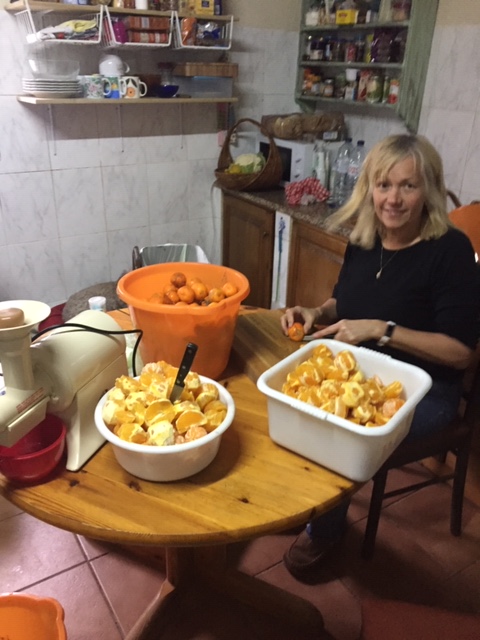
With our buckets of gathered oranges in hand we headed back up to the annexe and set about the process of juicing them. We love drinking fresh orange juice, and found our champion juicer made the grade with hardly any waste at all. It also came with a handy recipe book which I guess will be consulted when our veggie patch is up and running and we have other fruit and veg to hand.

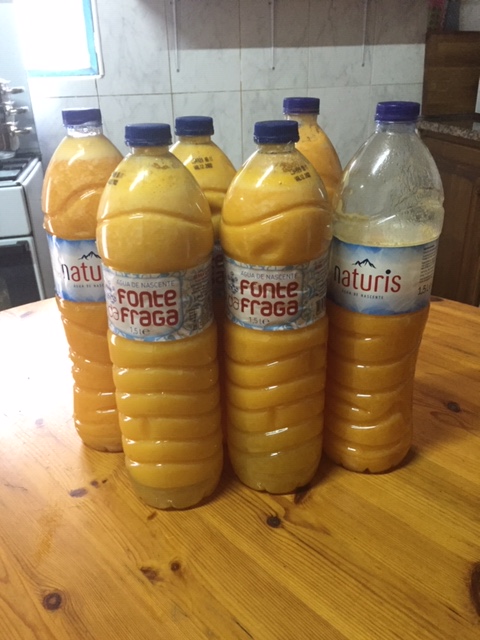
One bucket of oranges yielded about a litre and a half of freshly squeezed orange juice. Not bad we thought. However, we noticed that after a while the juice started to separate and split, with water left at the bottom and bright orange juice at the top. Keen to satisfy our “thirst” (please do excuse the pun) for knowledge, we researched why this happens and if it is a good or bad thing.

When we juiced our fruit, our end product consisted of water (containing dissolved sugars, vitamins, and minerals) as well as pulp. The pulp is made up of little tiny sacs which contain the juice when the fruit is whole. When juicing the oranges, the majority of these are broken down with most of the juice flowing out. If the juice is not filtered, the little sacs are still present and as they are lighter, they float to the top.

There’s nothing wrong with the juice splitting, all that is needed is a little shake to mix it up and it’s back to normal again.

Companies who manufacture orange juice prefer that their juice does not split, so go to great lengths to blend it together, causing the sacs to become much smaller and as a result spread through the juice much easier.

We also wanted to know if oranges grow all year round in Portugal.  Although orange trees are evergreen, they do not produce fruit continually throughout the year.   Each tree produces one crop of fruit each year, with the fruiting cycle taking up to 10 months for some varieties.  However, different varieties have different seasons, either early, mid or late.  As this is our first year on the farm, we decided that the best way forward would be to watch and wait to find out exactly which category each of our trees fall into.  With an abundance of fruit, our challenge for the moment is to find as many different ways as we can to utilise it.  We have already started to create a little frozen storehouse of bottled juice to drink when the trees are bare and over the next few weeks we will be experimenting with cakes, biscuits, preserves and anything else we can think of.

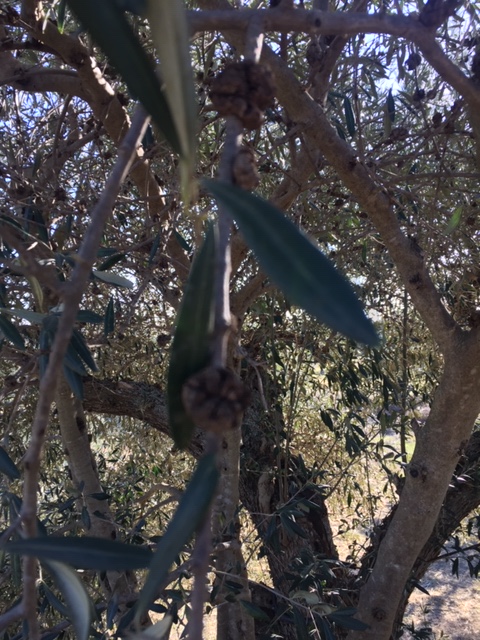
A few weeks ago, when we first started our monumental task of cutting back the olive trees, we noticed lots of little galls or knots on the branches.  It seemed that most of our trees had these to varying degrees and our mission to find out the best way to treat this came up with conflicting theories.

Not to be dis-heartened, we contacted our friendly horticulturalist (and curator at RHS Wisley) Matthew Pottage, for some guidance.  He sent us a link to a source he trusted.

Olive knot is caused by a bacteria.  The bacteria makes the tree produce the galls or knots which are basically a woody olive-derived tissue which the pathogen then lives in. 

Some of our olive trees were more infected than others and we needed to know if it affected the olive harvest and what we could do to try and eradicate the problem. 

The management of the olive knots involves three strategies – sanitation pruning, chemical protection against new infection and the chemical management of existing knots. Unfortunately, our research came after we had started in earnest to prune back the trees. Basically, we had been pruning them at the wrong time for managing the pathogen as it should be done in hot and dry weather when the bacteria is dormant. The pathogens activity is at its peak during rainy periods, and we have just had Storm Christoph pass through! The other thing that we should have done, and didn’t, was to continuously sterilise the pruning equipment.

Reverting back to the link, we discovered that we need a liquid copper based fungicide to spray on the trees. As we are in lockdown, and reluctant to travel un-necessarily, we spent the afternoon trying to find something that we can order online, frustrated that the only one we could find costs 18 Euros for the product and 21 Euros for the postage.

Given the quantity of the product that we will need to treat 80 olive trees, we decided that the only real option is to travel into Fundao to find an outlet locally.  In the meantime, we will make sure that when pruning back the remaining trees, we implement a stringent disinfecting process of the equipment.

Although the trees don’t die off because of the bacteria, the disease can affect the fruit size and quality and can yield an off-flavour fruit, so we are keen to get this resolved and will make sure that we buy our fungicide the next time we need to go into Fundao.

In our quest to embrace and broaden our experience of all things – we have decided that we will try new foods starting with fruit and veg that are not familiar to us.

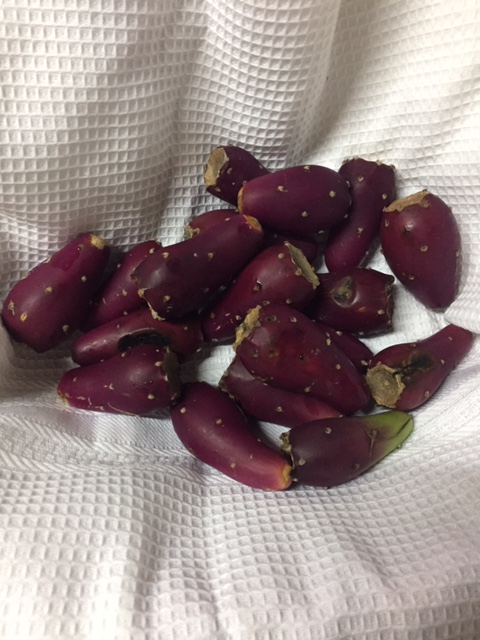
Walking around our Quinta, we have some large cacti that produce little prickly purple fruits. I recognised these from my trips to Morocco with the Dental Mavericks as being “Prickly Pears” so we decided we would harvest some of ours and look into how to prepare and eat them. Again, we headed to the internet and found quite a wealth of information. It would seem that they can be used to make jams, jellies, smoothies or just be peeled and eaten as a fruit. They are high in anti-oxidants, good for liver health, rich in vitamin C, Calcium, and Potassium, high in fibre and low in carbohydrates. And, with the added bonus of only 40 calories each we thought these were a fruit well worth sampling.

The fine little thorns covering the surface were a bit tricky to get off but once these had been removed, we cut off each end, put a small slit lengthways in the skin and peeled it back to reveal the beautiful purple fruit.  The texture reminded us very much of a kiwi fruit although with a mild, sweet taste the texture was the only similarity.  They are a bit fiddly to handle and don’t really part with their skins very easily but definitely something that we will try to do more with.

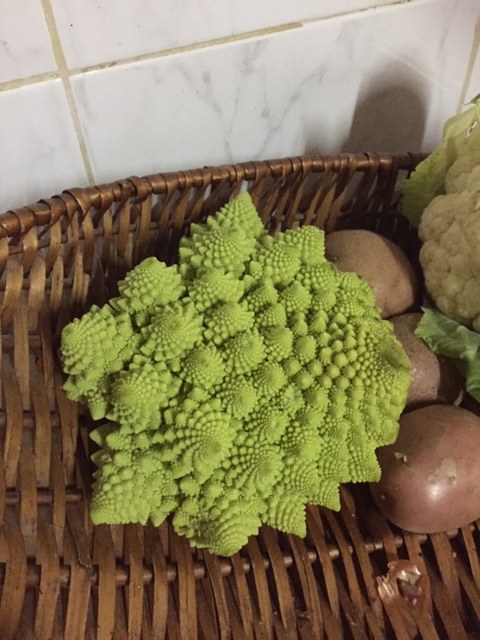
The other thing new to our taste buds was the Romanesco cauliflower.   With its eye-catching appearance, we soon spotted this during our monthly trip to the shops to replenish our provisions and brought it home to try with our sausages and mash.

The shape of its little spirals were almost architectural and its unique taste did not disappoint.  It has a surprisingly sweet taste, with a slight nutty flavour and unlike its cousin, the cauliflower keeps it’s firm and crunchy texture when cooked.  Some salad recipes include it in its raw form with lemon juice and toasted pine nuts, and others pair it up with pasta, butter and crispy shallots.   

Both foods received a big thumbs up from us and an equally big recommendation to anyone who hasn’t eaten this to try it for themselves.

Storm Cristoph and the rainy days have meant that we have been restricted to working mostly indoors and took advantage of this do our research. However, this being said, the Ecositana team have continued to make progress with the building work and the barn roof has now been completely removed along with the apex walls. It was great to see the the new roof tiles were finally delivered today. A few test tiles were fitted before the guys wrapped up for the weekend giving us a tiny insight into what is to come.

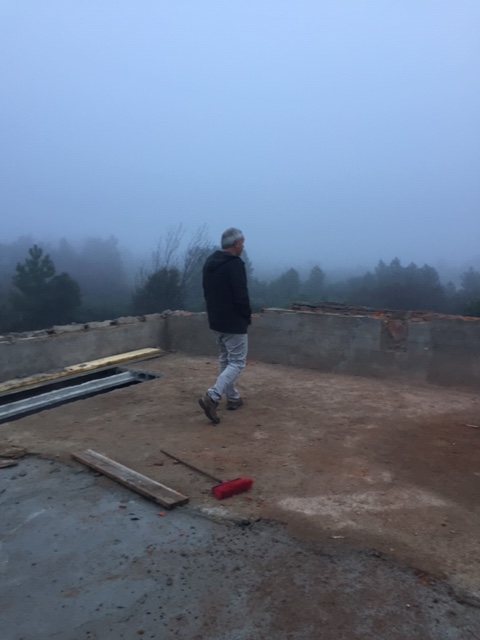
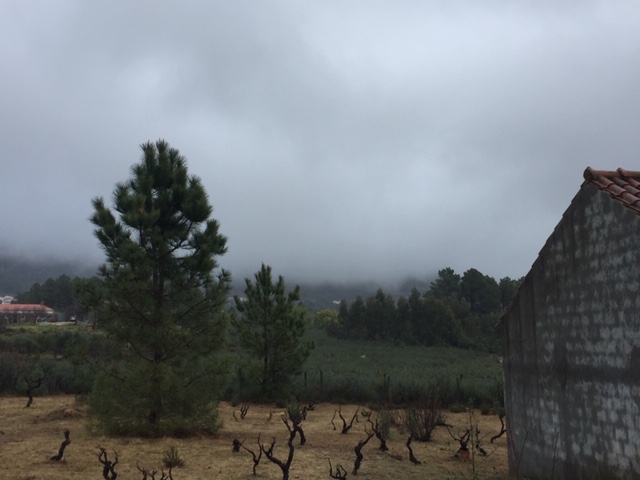
Although it meant climbing up a rickety old wooden ladder, we were able to access the new first floor of the barn conversion for the first time (our future bedroom). Unfortunately due to the heavy mist which had descended we were unable to exploit the potential of our views… to be revisited on a clearer day.

If you have enjoyed reading our blog our have got any comments, we would love to hear from you. Just head over to our contact page and send us a message.

… we look forward to hearing from you,
Gill and Mark

There’s a Storm brewing!

As Storm Cristoph descended upon us so did our inability to get outside and do anything on the land.   We’ve heard from other people that this is an ideal time to catch up on things that they have meaning to get round to for ages – reading a book, pursuing a hobby, calling friends and family or maybe watching a film or doing the ironing.

Mark took advantage of the down time to Facetime Annie and hear about how her new cake baking venture is going.  He also managed to get in touch with “family Brown” and it was lovely chatting with the kids.  They are also in lockdown and are taking full advantage of their family pub “The Dog and Duck” which has been made out in their back garden, seems like its the future!  

We too had a list of things to do that were overdue.  Mark put up some shelves in our little annexe to create more storage.  Wanda now has a full shelf all to herself in the cupboard under the sink and we have ourselves a mini bar and our electrical stuff neatly packed away out of sight.


However, keeping busy was a bit more difficult as we may have first thought as we are in Lockdown and confined to one little room.  Although we could do essential shopping, we do not want to be venturing out, not even for essentials. Anyway, there’s nothing that we really “need” as we’d stocked up a couple of weeks ago. 

We bought enough uht milk to keep us going for a while and surprisingly have got quite used to drinking it.  We have our endless supply of freshly squeezed orange juice and our walking stick cabbage plant straight outside of the annexe door.  We’ve also fond that fruit and vegetables keep much longer if they are spaced out in the fridge. 

As well as giving us juice, the oranges also produce a supply of pulp.  True to our adopted Portuguese way of thinking, we don’t want to waste anything that could possibly be used and decided that we would try our hand at ice-cream making.  We took some vanilla ice-cream from the freezer, let it defrost slightly and then mixed in our orange pulp before popping it back in the freezer to set.  We tried out our experimental desert after dinner and it was really delicious.  However, being the chocoholics that we are – we plan to recreate this on a stick dipped in dark melted chocolate and rolled in toasted chopped nuts to make ice-cream lollies.

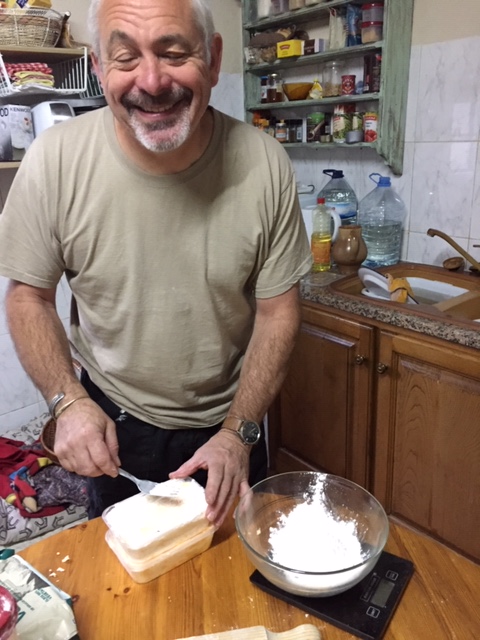
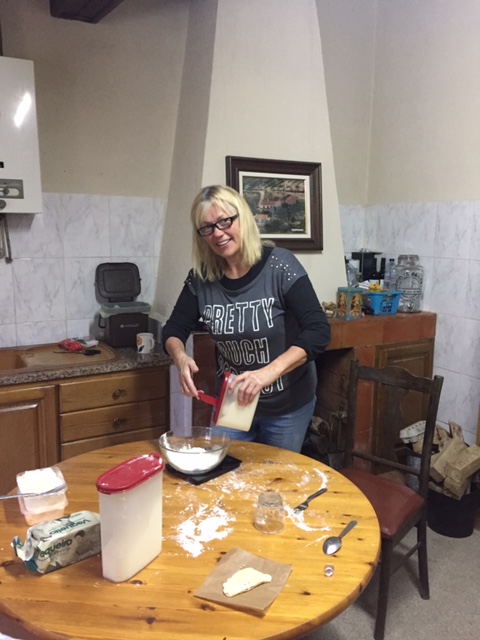
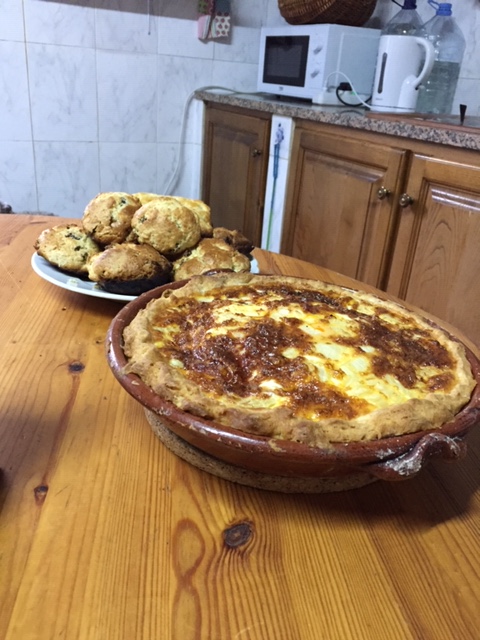
While Mark was busy making his ice-cream, I was having a bake-fest too.  It had been difficult figuring out in the supermarket what to buy to make pastry, or what to buy to make cakes for that matter.  Having invested in a few different items I was keen to try out my ingredients opting for coconut tarts (these were always Mark’s dads favourite and I’m sure that Whitworths profits increased tenfold after meeting him).  I also had a go at scones and a cheese and chorizo quiche and was quite pleased with the results.


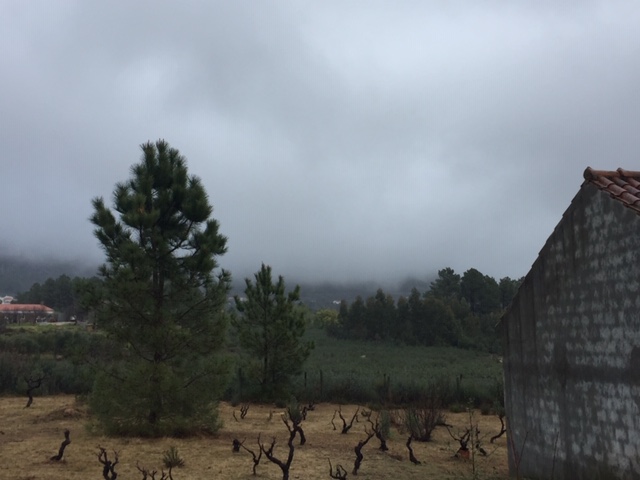
It was warm and toasty with the oven on and the aroma of home baking made our little annexe bed-sit feel cosy and homely.  Outside the wind and rain was picking up and we could see the rainclouds rolling down the mountain side.  Certainly not the bright blue skies and fluffy white clouds that we’ve been used to!

Antonio and Raphael called by with a copy of our plans in hand and a few questions that they wanted to talk through with us.  We had included at the back of the barn a couple of triangular windows where the bathroom and the dressing room would be.  It quickly became apparent that they would not really be practical as they would be out of eye level and we would not be able to reach up to open them. 

Our reasoning behind the concept was to make them a feature, something a little bit out of the norm, which would compliment the modern extension, but as we needed to be able to open these in the hot summer months and create a through draught to the front of the bedroom, we agreed that they had to be lower and decided on rectangular ones instead.  

The next question brought us to the front of the longhouse to review where the extension would meet the existing building.  

We needed to make a decision whether to build this in concrete or wood. As there will be quite a lot of glass on both sides, we chose a timber construction to compliment the area where the bedroom and the new flat roof will be. This will also help to mask the joining together of the old and new buildings. We talked about the staircase, removing part of the wall and putting in new concrete beams. It all seemed to be so real all of a sudden, after two years of waiting and chasing the sellers and solicitors, everything seems to be slotting into place.

Moving into the kitchen area, we could see that the rain water had worked its way through the temporary roof where the longhouse met the barn. It had come down the corner of the building and also down the chimney, but fortunately it looked as though the water had bypassed the new vaulted ceiling.

As this is an outside wall, it made us realise the effect that any water ingress would have on timber cladding so we decided that we would insulate and then plasterboard to help keep it dry.

Two of the Ecositana team would be coming back tomorrow to start work in the barn, so in preparation Mark needed to empty both storage areas so that they could get in.  It took a while clearing everything out and moving it into the longhouse.  When disassembling the old animal shelter and hay feeder, he moved some planks and uncovered a rats nest.  The rat shot out in front of Mark and ran vertically up the wall and on to the mezzanine floor above leaving behind its nest made of shredded paper, plastic and straw.  We knew that there had been some rodent activity is this building but it was still a surprise to find the nest tucked snuggly in its little hidey hole.

With the nest removed, the rat would need to find a new home and we had plenty of new cardboard boxes and nooks and crannies not too far away that we feared may seem far too inviting.

We’d invested in some rat bait and a trap a few weeks ago when we had some sort of night time activity on top of the annexe roof.  This has never caught anything, so we decided to move it into a storage area that we haven’t really explored since arriving.  It is full to the brim with old bits of furniture, artifacts and farm equipment.  Mark added the bait, set the trap and put it on top of a frame that was being stored in there.  It will be Mark’s job to check it each morning and report back while I wait in the annexe!

The following day, The builders were back on site and by the end of the day had removed the old water tank, cut out the slots for the new concrete beams and crate a hole in the roof where the stairs will be placed.

The rat had taken it’s supper and managed to avoid setting of the trap. Mark re-set it with more bait and will check again tomorrow.

We kept out of the way of the builders, walking the plot when the weather permitted. We’re keen to be back out working on the land and finding it very frustrating being confined to barracks. The rain, although not as severe as what we were used to in the UK, has made the land extremely waterlogged and sodden. Although it has been mostly what we would describe as a heavy drizzle, the tracks where the crane has been driven are full of water, the wells are filling up again and our little brook is flowing faster.

According to our Google weatherman, today is the last day of the rains so we are planning on an early start in the morning to review the terraces and see what, if anything we can get outdoors and get on with.

Three Wheels on my Wagon!

Ever had one of those weeks when things start off lovely and then seem to go from bad to worse? and then just when you think that nothing else can go wrong, guess what? it does!

Our trusted tractor shed a shoe!

With all the news headlines recently about various storms, different weather fronts and snow and ice across the UK and  throughout Europe, we can be excused for frequently visiting good old Google to check out the weather.

Mark struggles to get a forecast for our area, Vale de Prazares on his phone and swears that he has to stand in the middle of one of the terraces on one leg with his finger in his ear to pick it up.  I choose the easier way of clicking on the little add button on the bottom of my screen and typing in the name of our village.  Either way, we both found that storm Christoph was on it’s way and that we were in for a wet few days.

Wanting to get as much done out on the land before it hit us, we decided that we would make the most of the good weather and get on with more olive tree trimming.  There was also the issue of the ever increasing cistus fields and the business of either relocating it to elsewhere on the plot or burning it. 

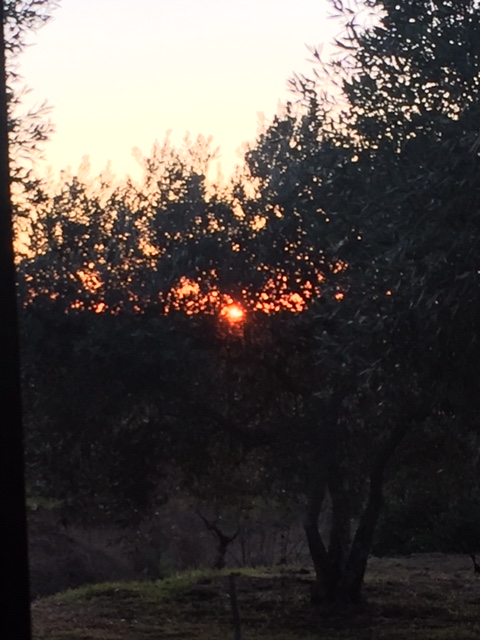
So, without further ado, we set our alarm and at 6.30 and were soon up and about to kick start the day.   This end of the day is the mirror image to the 5.30pm lights out – it’s pitch black at 6.30am and as we stand and look out of the annexe door towards the Gardunha mountains we can see the faint orange glow of the sun as it starts to appear.  Within minutes it has made its debut and we have before us a brand new day.  This has always been my favourite time,  peaceful, unspoilt and full of promise. 


Our trusty Google weatherman had told us that we could expect highs of around 13 degrees but as we waited for the sun to warm the ground, we wrapped up to take our customary morning walk with Wanda and could see the frost hiding in the shadows. Wanda loves this time of the day too. Maybe it is the lingering scents left behind by our nightime visitors or maybe she is still exploring her new home and finding her routine as well.

Yesterday we had managed to trim back the last of our vines and had felt rather proud of ourselves. Today we had booked in with the Camra to have a bonfire and there were two rather large bonfires on the bottom terrace waiting to be lit. We also had several piles of Cistus that Mark had been working on over the past few days dotted around the higher terraces which needed to be taken down to the bonfires as well.

This was the start of the downwards spiral. The ride-on tractor had thrown a shoe and one of its back wheels was completely flat. There was no way we were going to get it repaired in a hurry so decided that the only thing for it was to shift the cistus to the bonfire by hand (or rather by wheelbarrow and sack).

It was a bit tricky getting the fire going again, but eventually with a little bit of gentle coaxing we had ourselves a blaze. The problem then was to get the piles of cut cistus down quickly enough to make sure the fire didn’t go out. Manoeuvring a wheelbarrow wasn’t the quickest or easiest thing I’ve ever done and to be honest I think I am in need of a lesson or two in pushing these things around. Mark was whizzing up and down the terraces like a gazelle with his cargo, while I had to to stop and re-load my barrow more than once after it jack-knifed tipping everything out. Eventually, we agreed that I would do the loading and Mark would take it down to the fire. This was far more productive although we both sustained a fair few scratches to our arms and legs and just hoped that the healing properties of the cistus would live up to its name. Good job that we are both up to date with our tetanus jabs!

By the time it was dusk we had managed to shift seven piles of cistus as well as cutting back three of the olives trees on the bonfire plot. We were absolutely shattered, smelling of bonfires and hungry. Taking a hot shower went some way to reviving us but the soap made our cuts and scrapes sting. My Dad once told me, “you never know how good it feels to be clean until you have been really dirty”. He was absolutely right.

Another 6.30am start followed and we were all set for another day of olive trimming and land clearing. We opened up the gates and moved the car ready for the Ecositana team to arrive. With the ride-on still out of action, we had no option but to conscript our two petrol push along mowers into action that we brought from the UK. The Portuguese builders working on the the roof of the long house took a double take as they watched us trotting up and down the terraces outside the annexe pushing our little mowers. They must have thought we were nuts! We would have normally used the ride-on to mulch up the long hay-like grass that was laying on top so that it would break down and fertilise the land, but as the tractor was still out of action, we once again had to resort to manual labour. It was a struggle as the terraces are very uneven and I kept coming to an abrupt stop every time I hit a trough or bump.

We inherited a Japanese buffalo when we bought the quinta, which unfortunately is also out of action but the plan is to eventually get it repaired and use it to level out the terraces. A Japanese Buffalo is basically a two-wheeled tractor with large handles that resemble buffalo horns, hence the name. It can be used to til the land and some of them have a little wooden seat and a trailer attached. We’ve seen some of the locals passing by our Quinta with the farmer driving his tractor and his wife sat in the trailer. Perhaps that a step too far at the moment but never say never.

The team were doing well well with the roof getting as much done as possible before the storm came – fixing the layers of waterproofing, insulation and reflective sheeting to help protect everything from the rain. All seemed to be going well when Raphael came to find find us as they had discovered a problem. The original plan was to maintain the chimney stack at the opposite end to the kitchen so that we could create a little snug complete with a log burner to make it warm and cosy. The tiles had been taken off around the stack and found that the only thing that had been keeping it in place and upright were the old roof tiles. The chimney had been built on two pieces of wood which in themselves would have prevented us from putting a flue up the chimney. In addition, the height above the roof was far from the 1 metre minimum requirement. This meant that it was unlikely that we would have ever been able to have functional fire as there wasn’t enough height to create a draw. If by luck we had lit a fire, and it had taken, then the pieces of wood would have probably caught alight and taken the rest of the roof with it. It was agreed that the only real option was to let it go. The two temporary planks which were keeping it in place were removed and it literally took the push of a finger before the whole lot fell to the ground.

We were left thankful that we hadn’t attempted to make a fire in the room below and challenged with redesigning the layout of the room.  I hadn’t been too keen on the red and white brick fireplace from the start.  It hadn’t really bothered Mark either way so the result in my mind was a good one and we had the opportunity of making something lovely from the space it left behind.

We went back to more cutting of the trees.  More making of wine glasses and more branches to burn.  Not wanting to recreate the same scene as yesterday when we had to relay stuff to the bonfire, we decided to work on the terrace directly above where we have our fires and simply chuck it over the edge.  This worked a treat and the pile soon reached upwards in a neat stack to where we were standing.  If we had tried to create a stack so neat and tidy from ground level, we would have had no chance.

By 4.30, the Ecositana team were heading off.  The space in the longhouse where our belongings were stored did not have a roof and the storm was heading our way.  There was a very eerie feeling about the Quinta.  The light was a strange yellow glow and although the sun was shining, there was a chill in the air.  Everything seemed as though it was echoing around the mountains – the woodcutter still working his sawmill, the machinery working away in the distance and even the dog barking across on the next quinta.  All seemed odd as though something strange was about to happen.

We set about moving everything from one end of the longhouse to the middle section.  It’s a good job that we travelled light!!  We were already aching from the pushing the mower and cutting the trees but knew we needed to get everything protected from the water.  Eventually, after about an hour and a half, everything had been rearranged and we had even been able to find a couple of goodies that we were really happy to find.  I found a couple of tubs of white options hot chocolate powder, Mark found a box of mini magnums in the freezer.  Feeling exhausted, the last thing to move was the old fridge freezer that we have been using as a reserve during lockdown.  It still had a couple of things left in it, one of which was a very large bottle of superbock lager.

We’d stashed it in the longhouse for the month as Mark is doing the dry January challenge.  I for my part did the Stoptober challenge in 2019 and have been t-total ever since.  Tonight though, tired, aching, dirty and hungry we both decided that a part share in this little beauty would really hit the spot.


Temptation was soon to be taken from us as the fridge door opened slightly just as we were moving the fridge onto the sack barrow and in a flash the ice cold bottle of lager complete with the condensation running down the side of the large brown bottle smashed to the floor and all that was left was the smell of hops filling the room.

Within a second we burst into action sweeping the broken glass away from our cardboard packing boxes and out of the door before it had chance to soak through them. Fortunately Wanda had been left in the annexe so there was no danger of her cutting her feet. A large chunk of broken glass cut through the sole of my trainer, fortunately stopping before reaching my foot.

Wearily, we locked up the longhouse and made our way to the annexe – mini magnums and hot chocolate under our arms.

Hot showers, fish pie (one I prepared earlier and courtesy of chef-mike) rounded off with our ice-cream lollys. We lit the log burner and sat in the warmth of its flames looking back over the past few days, reflecting on the challenges we had faced and day-dreaming about how it will feel when we have renovated and restored this little Quinta.

If you’ve got a dream, don’t bottle it up. Go with it and you never know, your may just end up in a wonderful little place like this.

The Cistus Fields – Revisited

This morning’s routine of a 6.30 alarm call, shower and unlocking the longhouse for the builders was abruptly interrupted when there was a loud knock on the door. It was a bit alarming as we don’t get many callers in the middle of nowhere. It turned out to be one of the Ecositana team who was trying to explain in Portuguese the reason for him being there. All that was running through Mark’s mind was “I wish I could speak Portuguese”. After some gesturing and beckoning with his index finger, Mark followed him up to the longhouse.

He continued to explain in Portuguese what he wanted, pointing first to the kitchen ceiling, and then to that in the room next to it, saying “esta? esta?”. All that was running through Mark’s mind was “I wish I could speak Portuguese”. Eventually, it became apparent that he wanted to know which ceiling to remove and it was Mark’s turn for gesturing to let him know.

Everything seeming to be sorted, Mark turned to the builder and said “Tudo Bem” (which means all ok? in Portuguese). The expression on the builders face for all the world seemed to say “now you can understand Portuguese?”.

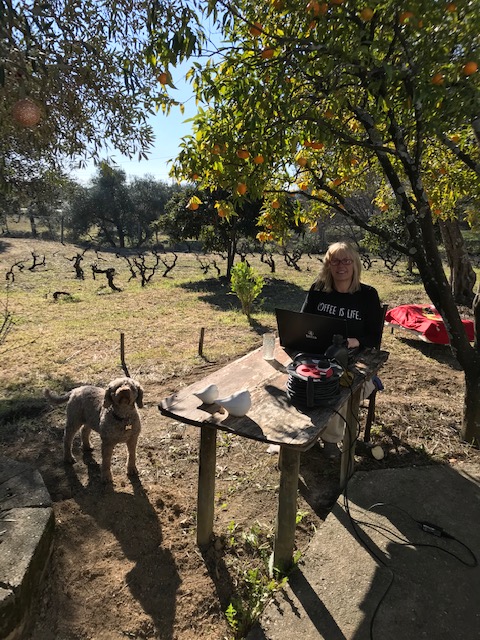
Today was a day in the office for me and as is was such a lovely day, I was able to work outside. Wanda seems to be my shadow these days – not sure if it’s because I give her more treats or if its because she gets to lie in the sun when I’m working. She’s taken really well to being a farm dog and seems to have little short cuts to get around the place. I’ve noticed sometimes when I’ve set off on the tractor to go to a different terrace that she’s arrived there way ahead of me. Usually there is a lot of ball throwing when were out on the land which means that by tea-time she is tired out and sleeps all night. We must have brought with us a dozen balls for her to chase and I think ten of them are dotted around the Quinta.

Mark decided to go back and work in the Cistus field as it is quite a way from the house where the builders are and quite a way from where I was working.  I thought I heard voices at one point and went down to see who he was talking to.  It turned out he was talking to himself, or rather practicing his Portuguese out loud.   When we were in the UK we bought an audio Portuguese language course,  We never really got past asking for directions to the tourist information office or asking for more marmalade, but he was really going for it today and already up to lesson 7, obviously trying to make up for his shortfalls this morning!

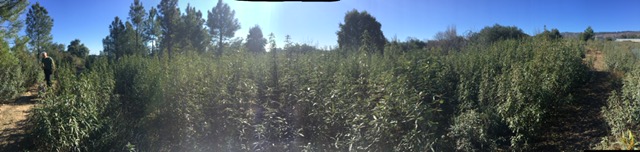
So, back to the Cistus.  Mark has been busy trying to dig it out and re-plant on the boundary and today managed to dig up approximately 209 square metres.  There were a couple of hidden surprises as he went along …. 1 fig tree, a cork oak and three vines.  Just goes to show how tall this stuff can grow and take hold if you can lose trees in the middle of it. 

We also discovered that one of the pine trees had been damaged by wild boar, probably when they have been foraging on the land.  Apparently, they are quite hungry at this time of the year.  A few weeks ago we were told that a wild boar had been shot nearby by hunters and it took three grown men to carry it away.  We did come across one at the side of a lake when we were here last year and fortunately it was on the other side as it wasn’t a very cheerful looking chappie.

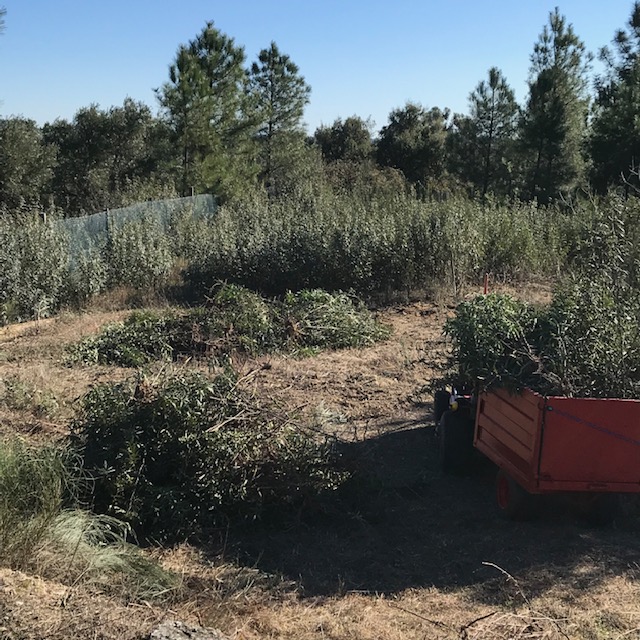
The cistus loaded in to the trailer ready to be taken down to the bonfire

On the plus side, now there is some progress being made in removing the cistus, we are now able to access our little wooden copse.  This is a small area at the furthermost north-eastern part of the land containing approximately 20 pine trees and couple of cork oaks clustered together.  There are also clumps of lavender dotted around which smell so lovely and a few other plants that smell nice although as yet we’re not sure if they are weeds.

At this time of the year, as we have pine trees, we have to be very mindful that this is now the season for the pine procession caterpillars and they are extremely dangerous to dogs.  We have seen silky white nests in the trees near to Linda and Andy’s quinta where the processionary moth has laid its eggs during the summer on the pine needles. When the caterpillars hatch, they eat the pine needles during the night and go into their nests during the day.  The caterpillars grow during the winter months and around this time of the year they are ready to make their transformation – this is when they become dangerous.  They leave their nests and make their way down the tree to the ground in search of somewhere to bury themselves and turn into pupae for their transformation into moths. They have tiny barbed hairs covering their body and can be launched like harpoons if threatened.  When they come down the tree, they travel in a processional line, nose to tail, hence their name and the line can sometimes be a few metres long and resembling a fluffy snake.

We are keeping Wanda away from the trees for the next couple of months because we have read that if she was to sniff a caterpillar, she could suffer horrific injuries or even die – the vet has told us that some dogs have even lost their tongues.  We’ve considered cutting down the trees but really like the wooded copse and the world certainly needs more trees.  There doesn’t seem to be any of the nests in our trees, but to be safe, we will not let Wanda anywhere near them for a while.


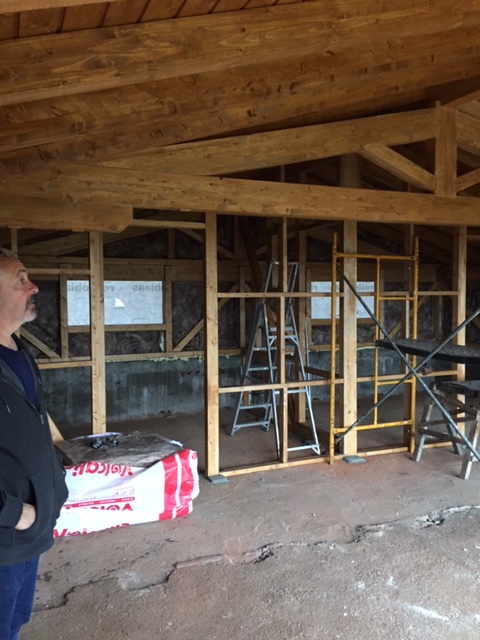
The sound of sawing wood, hammering and loud voices could be heard coming from the direction of the long house.  By mid-afternoon we could see that the tiles on the final section of the existing roof had been removed.  Raphael came to give an update of what was happening.  They had decided not to insulate and waterproof the existing two thirds as no rain had been forecast and they wanted to crack on and get the last bit taken down so that they could start concreting the ring beam.  This had become more complicated than first thought, so had taken longer. But we now have a vaulted timber kitchen ceiling and the middle section of the longhouse is boarded ready for the next stage. 

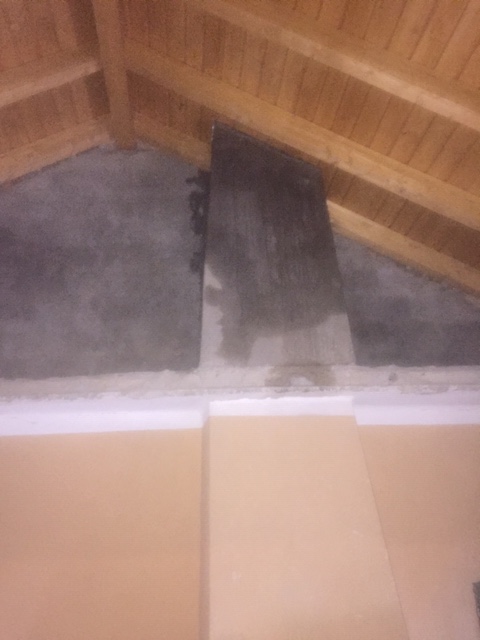
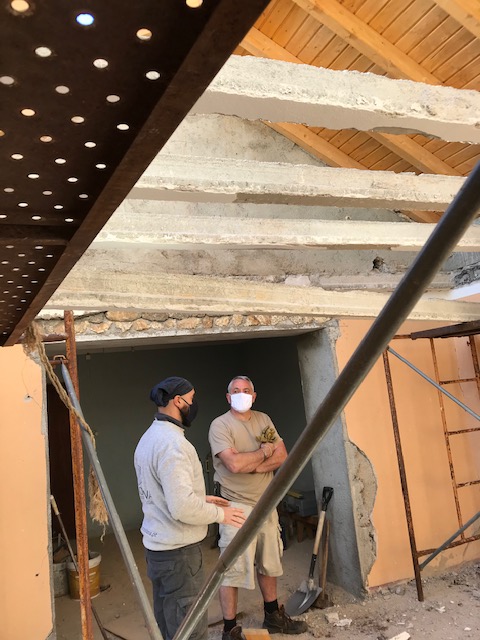
The vaulted ceiling in place, the concrete beams still to be removed and a decision yet to be made about exposing the granite wall